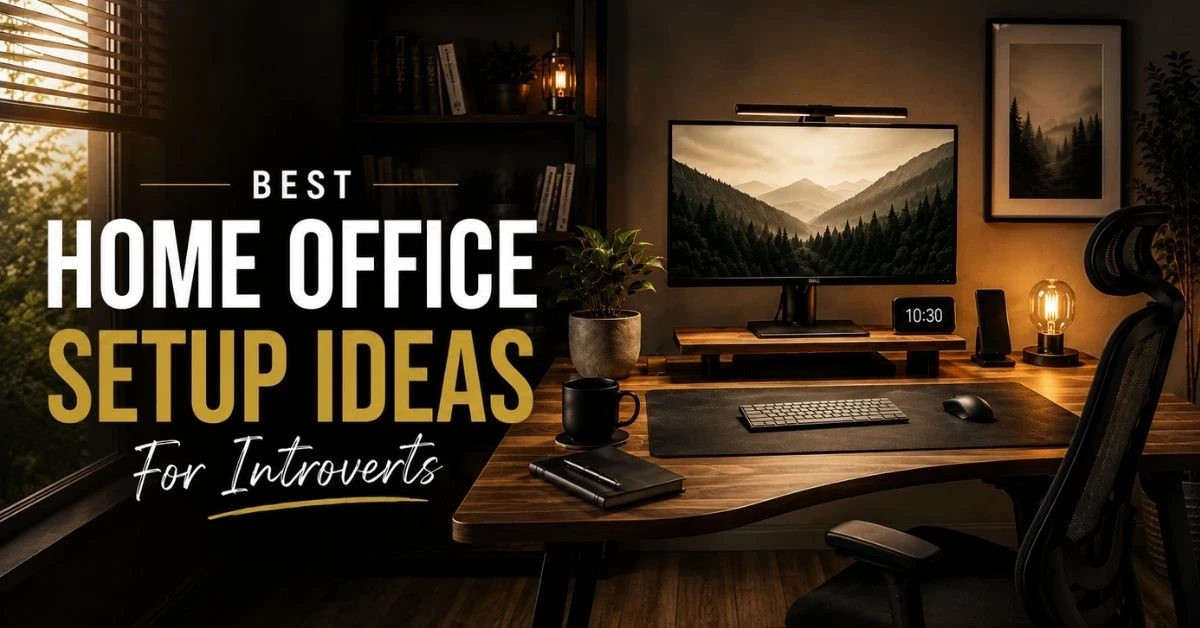
Creating the right home office setup can completely change the way you work, think, and feel throughout the day — especially if you are an introvert.
For a long time, I underestimated how much my environment affected my focus, energy, and ability to work consistently. I thought I simply needed more discipline.
But constantly working in noisy, cluttered, or distracting spaces quietly drains your attention faster than most people realise.
Introverts often perform best in environments where they can think clearly, focus deeply, work without constant interruptions, and feel comfortable while working.
Creating the right environment becomes even more important for people who struggle with overstimulation, anxiety, or ADHD-related focus issues.
That does not mean hiding away from the world.
It simply means creating a workspace that supports your personality instead of constantly working against it.
The good news is you do not need a massive office, expensive furniture, a luxury setup, or the “perfect” Pinterest workspace.
Most of the time, small upgrades like better lighting, less clutter, a comfortable chair, reduced distractions, and better organisation make the biggest difference.
Even simple changes can dramatically improve how working from home feels day to day.
In this guide, we will cover home office setup ideas for introverts, productivity and comfort upgrades, minimalist workspace ideas, noise-reduction tools, lighting recommendations, and practical Amazon products to consider.
Whether you work remotely, study online, run a business from home, trade the markets, or create content regularly, this guide will help you build a workspace that feels functional, focused, and genuinely enjoyable to spend time in.
A lot of people assume working from home automatically feels peaceful. In reality, noise, clutter, poor lighting, distractions, and uncomfortable setups can quietly drain your attention throughout the day.
That is why creating a low-distraction and comfortable workspace matters far more than most people realise.
Constant distractions and overstimulation quietly erode focus over time, which I discussed in more depth in my article on The Dopamine Trap: Why Modern Life Is Destroying Your Focus.
Because at the end of the day, productivity is not only about working harder.
Sometimes it is simply about creating an environment that makes focus feel easier and work feel less mentally draining.
The best home office setup for introverts is one that reduces distractions, supports deep focus, improves comfort, and creates a calm environment that feels easy to work in for long periods. You do not need expensive equipment or a dedicated office room. Often, simple improvements such as better lighting, less clutter, a comfortable chair, and reduced noise make the biggest difference.
This article may contain affiliate links. If you purchase through these links, Introvert Evolution may earn a small commission at no extra cost to you. I only recommend products I genuinely believe can improve comfort, focus, and productivity while working from home.
Table of Contents
- Start With Your Desk
- Office Chairs
- Lighting
- Noise Control
- Minimalism
- Productivity Tools
- Cosy Workspace
- Small Spaces
- My Top Picks
- FAQ
- Conclusion
Home Office Setup For Introverts: Start With Your Desk
Your desk is the foundation of your entire home office setup.
It affects your comfort, posture, organisation, workflow, and ability to stay focused during long work sessions.
A poorly designed setup quickly becomes frustrating to work in. Not having enough space, dealing with clutter, or constantly adjusting your position throughout the day quietly drains both energy and concentration.
For introverts especially, a workspace should feel comfortable, organised, low-distraction, and easy to work in for long periods. In many ways, the best home office setup for introverts is one that removes friction and makes focused work feel natural.
The goal is not creating the flashiest setup possible.
It is creating a workspace that feels functional, intentional, and mentally easy to work in every day.
Cleaner setups often make it easier to concentrate because there is less visual clutter competing for your attention. A well-designed home office can help reduce overstimulation, improve productivity, and create a calmer environment for deep work.
I have noticed this becomes especially important in trading setups where too much information and visual clutter can quickly become mentally exhausting. When your workspace is organised and intentional, it becomes much easier to focus on the task at hand rather than constantly reacting to distractions.
Choosing The Right Desk For Comfort And Productivity
Your desk should support the type of work you do daily.
If your setup feels cramped, cluttered, or uncomfortable, staying focused becomes much harder than it needs to be.
A good desk improves comfort, organisation, workflow, and focus during long work sessions.
One mistake many people make is choosing a desk purely because it looks impressive online.
But when you spend hours working there every day, practicality matters far more than aesthetics.
Why Desk Size Matters
A desk that is too small quickly becomes frustrating.
When there is no room for your monitor, keyboard, notebook, or daily essentials, everything starts feeling crowded very quickly.
At the same time, bigger is not always better.
Massive desks overloaded with gadgets and decorations often become distracting instead of productive.
The best setups are usually simple, functional, and large enough to work comfortably without unnecessary clutter.
If you trade, edit videos, create content, study regularly, or use multiple monitors, extra desk space becomes far more useful.
The key is balancing functionality with simplicity.
Standing Desk vs Traditional Desk
Standing desks have become increasingly popular for a good reason.
Sitting for long periods often leaves people feeling stiff, low energy, and unfocused.
Being able to alternate between sitting and standing throughout the day helps improve movement, posture, blood flow, and energy levels.
Small physical habits throughout the day can make a huge difference to both productivity and long-term wellbeing.
You do not need to stand all day.
Even standing briefly a few times daily can make a noticeable difference.
If a full standing desk feels too expensive, desk converters are another good option.
Recommended Standing Desks Worth Considering
Popular options worth considering include:
- FlexiSpot Standing Desk
- FEZIBO Adjustable Desk
- Agilestic Electric Standing Desk
- ErGear Electric Standing Desk
These work especially well for remote work, trading setups, study spaces, evening work sessions, and minimalist offices.
| Standing Desk | Best For | Budget | Best Feature |
|---|---|---|---|
| FlexiSpot Standing Desk ⭐ Recommended | Overall balance | Mid-range | Smooth height adjustment |
| FEZIBO Adjustable Desk | Budget setups | Budget | Affordable electric desk |
| Agilestic Electric Standing Desk | Everyday home office | Mid-range | Simple electric adjustment |
| ErGear Electric Standing Desk | Small spaces | Mid-range | Compact space-saving design |
Keep Your Desk Minimal
One of the biggest productivity upgrades is reducing visual clutter.
A cleaner desk usually makes it easier to focus, stay organised, think clearly, and work without distraction.
Try keeping only the essentials visible:
- Laptop or monitor
- Keyboard and mouse
- Notebook
- Water bottle
- Desk lamp
- One or two personal items
Everything else can usually be stored away neatly.
Cable Management Makes A Bigger Difference Than People Expect
Messy cables instantly make a setup feel disorganised.
Simple upgrades like cable trays, cable clips, cable sleeves, under-desk organisers, and wireless accessories can make your workspace feel significantly cleaner almost immediately.
Recommended Desk Accessories Worth Considering
Small desk upgrades can improve both comfort and organisation without overcomplicating your setup.
Useful additions worth considering include:
- Desk mats
- Monitor risers
- Laptop stands
- Cable organisers
- Under-desk drawers
- Wrist rests
- Adjustable monitor arms
- Wireless charging stations
You do not need a luxury office filled with expensive gadgets to work effectively from home.
A clean desk, enough working space, good lighting, and minimal distractions will usually outperform an overcomplicated setup filled with unnecessary equipment.
The best desk setup is simply one that helps you work comfortably and stay consistent long term.
The Best Office Chair For Long Work Sessions
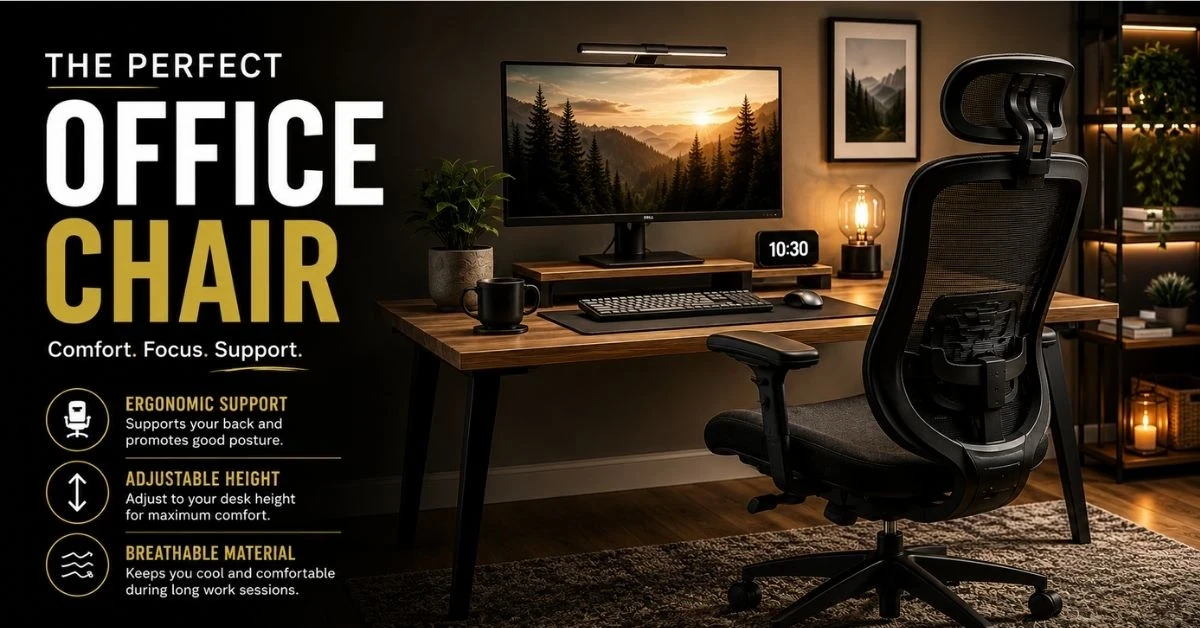
Most people do not realise how much their chair affects productivity until they start spending long hours working from home.
You can have a clean desk, expensive monitors, a minimalist setup, and a well-organised workspace…
…but if your chair leaves you uncomfortable after an hour, your energy and concentration slowly start disappearing throughout the day.
Poor posture often leads to back pain, neck tension, stiff shoulders, headaches, and physical fatigue.
Over time, discomfort becomes distracting and makes work feel far more exhausting than it needs to be.
That is why a good office chair is not only about comfort.
It is about creating a setup you can work in consistently without unnecessary strain.
Why Ergonomics Matter
An ergonomic office chair is designed to properly support your body during long periods of sitting.
You do not need the most expensive chair available, but features like lumbar support, adjustable height, comfortable cushioning, arm support, and breathable materials can make a huge difference to your daily comfort.
Physical discomfort quietly drains concentration over time.
When your body feels uncomfortable all day, staying consistent with work becomes much harder than people realise.
Constantly adjusting your posture or experiencing lower back pressure slowly affects both your energy and workflow throughout the day.
A supportive chair removes unnecessary strain from your environment and makes long work sessions far easier to sustain.
Features Worth Looking For In A Home Office Chair
When choosing an office chair, comfort should always come before appearance.
Useful features worth looking for include:
- Adjustable height
- Lumbar support
- Breathable materials
- Adjustable armrests
- Headrest support
- Comfortable seat cushioning
Long-term comfort matters far more than aesthetics.
Recommended Ergonomic Office Chairs Worth Considering
Popular ergonomic office chairs worth considering include:
- SIHOO Ergonomic Office Chair
- Hbada Office Chair
- FlexiSpot Ergonomic Chair
- Sihoo Doro C300
- Hbada E3 Air
These chairs work especially well for remote workers, writers, traders, content creators, students, and anyone who spends long periods sitting at a desk. Even upgrading from a basic dining chair to a proper ergonomic office chair can significantly improve posture, comfort, focus, and overall productivity throughout the day.
| Chair | Best For | Budget | Best Feature |
|---|---|---|---|
| SIHOO Ergonomic Office Chair ⭐ Recommended | Best value | Mid-range | Strong lumbar support |
| Hbada Office Chair | Small offices | Budget | Compact minimalist design |
| FlexiSpot Ergonomic Chair | Home office setups | Mid-range | Adjustable ergonomic comfort |
| Sihoo Doro C300 | Premium ergonomics | Premium | Dynamic lumbar support |
| Hbada E3 Air | Long work sessions | Premium | Advanced ergonomic adjustability |
Small Comfort Upgrades Worth Considering
Even small accessories can noticeably improve comfort during long work sessions.
Useful additions worth considering include:
- Lumbar support cushions
- Adjustable footrests
- Memory foam seat cushions
- Ergonomic wrist rests
- Anti-fatigue mats for standing desks
These upgrades help reduce physical strain without overcomplicating your setup.
Do Not Ignore Movement
Even the best office chair cannot replace movement.
Sitting too long often leads to lower energy, stiffness, and reduced concentration throughout the day.
Simple habits like standing regularly, stretching briefly, taking short walks, occasionally using a standing desk, and taking screen breaks can make a noticeable difference.
Movement improves both physical comfort and mental clarity during long work sessions.
You do not need a luxury office setup to work comfortably from home.
A supportive chair, better posture, regular movement, and a well-designed workspace will usually make a far bigger difference than expensive gadgets or unnecessary accessories.
Lighting Matters More Than Most People Realise
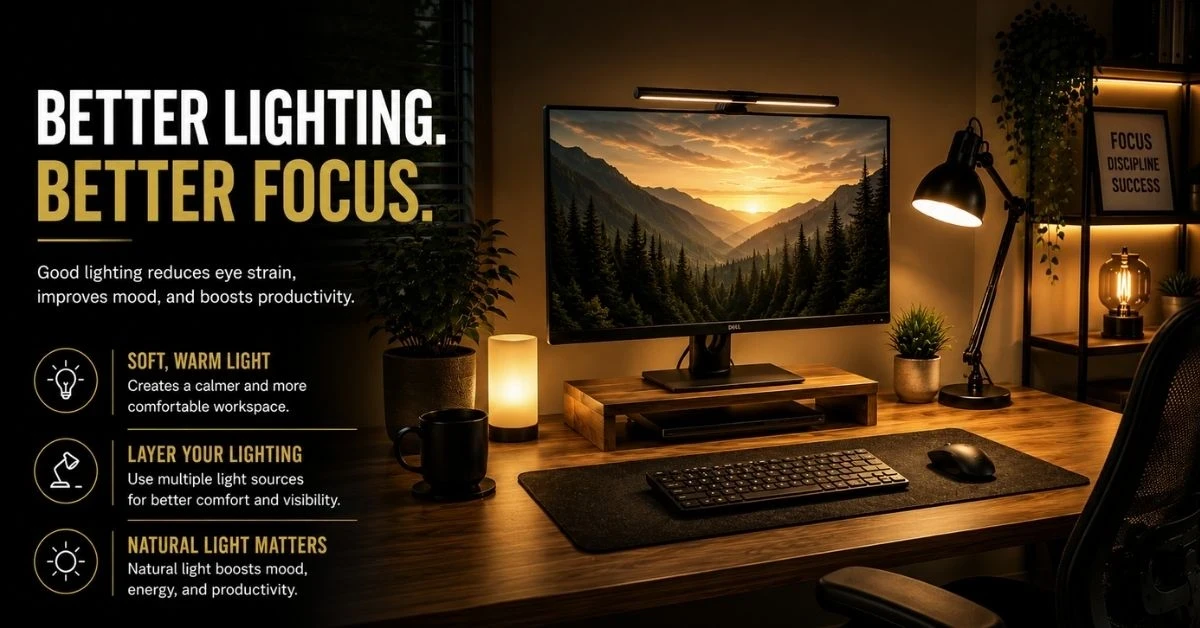
The right lighting can reduce eye strain, improve focus, and make long work sessions far more comfortable.
Lighting can completely change the way your workspace feels.
It affects your focus, energy, mood, eye strain, sleep quality, and overall comfort far more than most people realise.
Yet lighting remains one of the most overlooked parts of a home office setup.
A lot of people work in spaces with harsh overhead lights, dark corners, poor natural light, and screens shining directly into their eyes for hours every day.
Over time, this often leads to eye fatigue, headaches, lower concentration, increased stress, and reduced energy levels.
Modern environments constantly overload our attention, which is one reason focus has become so difficult for many people today.
The right lighting setup makes long work sessions feel noticeably easier on both your eyes and overall energy levels.
Natural Light Makes A Huge Difference
If possible, try positioning your desk near a window.
Natural light helps improve mood, increase energy, reduce eye strain, support better sleep, and make smaller spaces feel more open.
Even a small amount of daylight can noticeably improve the atmosphere of a workspace.
Personally, I prefer indirect natural light rather than sitting directly in bright sunlight because it feels softer on the eyes during long work sessions.
Avoid Harsh Overhead Lighting
Bright overhead lights can become exhausting after several hours.
They often create eye fatigue, monitor glare, headaches, and a colder atmosphere.
Warm lighting usually feels far more comfortable, especially during evening work sessions.
A workspace should feel easy to focus in — not harsh or overly clinical.
Desk Lamps Are One Of The Simplest Upgrades
A good desk lamp is one of the easiest ways to improve your workspace immediately.
It helps reduce eye strain, improve visibility, make evening work more comfortable, and create softer lighting around your desk.
Useful features worth looking for include:
- Adjustable brightness
- Warm and cool lighting modes
- Flexible positioning
- Minimal glare
LED desk lamps remain popular because they are energy efficient, long-lasting, adjustable, and minimalist-friendly.
Recommended Desk Lighting Worth Considering
Popular lighting options worth considering include:
- BenQ Monitor Light Bar
- Lepro LED Desk Lamp
- Philips Hue Smart Lighting
- Xiaomi Mi Monitor Light Bar
- Govee Smart Ambient Lighting
These lighting solutions work especially well for remote work, trading setups, study spaces, evening work sessions, and minimalist home offices. Whether you spend hours working in front of screens or simply want a more comfortable and visually appealing workspace, the right lighting can make a noticeable difference to both focus and overall comfort.
| Lighting Product | Best For | Budget | Best Feature |
|---|---|---|---|
| BenQ Monitor Light Bar ⭐ Recommended | Eye comfort | Premium | Reduces screen glare |
| Lepro LED Desk Lamp | Budget setups | Budget | Adjustable brightness |
| Philips Hue Smart Lighting | Smart offices | Premium | Mood customisation |
| Xiaomi Mi Monitor Light Bar | Minimal setups | Mid-range | Clean desk aesthetic |
| Govee Smart Ambient Lighting | Atmosphere & mood | Mid-range | Customisable ambient lighting |
Monitor Light Bars Are Seriously Underrated
Monitor light bars have become increasingly popular because they improve desk lighting without taking up extra space.
Instead of shining light directly into your eyes, they illuminate the desk area from above your monitor.
This helps reduce glare, improve visibility, reduce eye fatigue, and keep setups cleaner and more minimal.
For people who spend long hours in front of screens, this small upgrade can make work feel noticeably easier on the eyes.
Blue Light And Screen Fatigue
Most people spend hours staring at screens every day.
Over time, excessive screen exposure can leave your eyes feeling tired and may affect sleep quality — especially during late evening work sessions.
Simple adjustments that help include:
- Blue-light blocking glasses
- Night mode settings
- Lower screen brightness
- Warm evening lighting
- Regular screen breaks
These small habits can make screen-heavy work feel far less exhausting over time.
Smart Lighting Can Improve Your Workspace
Smart lighting is not essential, but it can noticeably improve the feel of a workspace.
Being able to adjust brightness, warmth, mood lighting, timers, and evening lighting setups helps create a more intentional environment throughout the day.
You do not need a complicated setup to improve your workspace.
Sometimes something as simple as better lighting can noticeably improve comfort, concentration, and the overall experience of working from home.
Noise Control: Creating A Better Environment For Focus
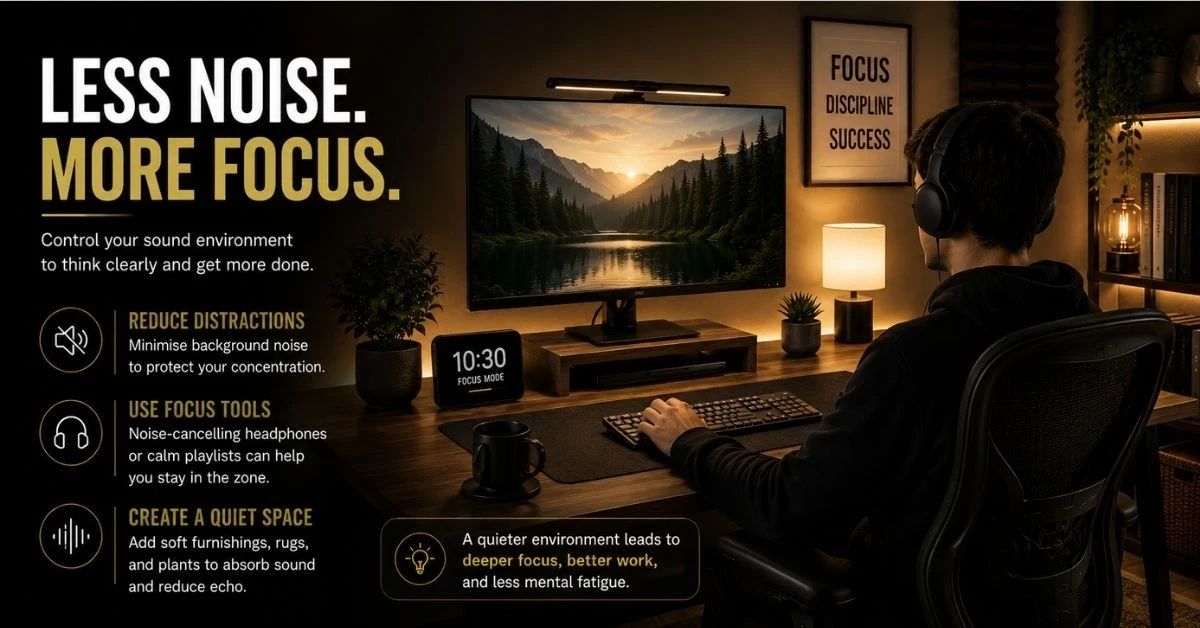
One of the biggest productivity killers while working from home is constant noise.
Background conversations, traffic outside, televisions, barking dogs, notifications, or nonstop household activity can quietly destroy your attention throughout the day.
The difficult part is that noise does not always feel distracting immediately.
Sometimes it slowly drains your energy in the background until, by the end of the day, you feel unfocused, irritable, overstimulated, and mentally tired — even if you have not done physically demanding work.
That is why reducing unnecessary noise can make such a noticeable difference to both concentration and overall wellbeing.
Why Noise Affects Productivity So Much
Focused work requires uninterrupted attention.
This becomes even harder for people who already struggle with distraction, overstimulation, or ADHD-related focus challenges.
Every interruption forces your brain to reset and refocus again, quickly breaking momentum.
This becomes especially frustrating when you are writing, studying, trading, editing, reading, or creating content.
Too much stimulation makes it difficult to stay fully immersed in what you are doing.
Personally, I have noticed that quieter environments make focused work far easier to maintain during longer sessions.
Noise-Cancelling Headphones Are One Of The Best Productivity Upgrades
If you work from home regularly, noise-cancelling headphones can genuinely become one of the best upgrades you make.
They help reduce background distractions, improve concentration, create a stronger “work mode” feeling, and make shared spaces far less distracting.
Even without music playing, reducing outside noise can make your mind feel noticeably less overloaded.
Once people experience the difference, many never want to work without them again.
I also wrote a full article explaining why noise-cancelling headphones can be such a powerful upgrade for introverts and deep focus work.
Recommended Noise-Cancelling Headphones Worth Considering
Popular options worth considering include:
These headphones are particularly useful for people who work remotely, study regularly, trade the markets, write for long periods, create content, or share their living space with others. In environments where background noise is difficult to control, noise-cancelling headphones can make a noticeable difference to concentration and overall productivity.
| Headphones | Best For | Budget | Best Feature |
|---|---|---|---|
| Sony WH-1000XM5 ⭐ Recommended | Deep focus | Premium | Excellent noise cancellation |
| Bose QuietComfort Ultra | All-day comfort | Premium | Extremely comfortable fit |
| Apple AirPods Max | Apple users | Premium | Seamless Apple integration |
| Soundcore Space One | Budget option | Budget | Great value |
| Sennheiser Momentum 4 | Sound quality | Premium | Excellent battery life |
Silence vs Background Sound
Some people work best in complete silence.
Others focus better with controlled background sound.
The important difference is intentional sound versus random distraction.
There is a huge difference between rain sounds, white noise, ambient music, or nature sounds… and loud conversations, constant interruptions, notification sounds, or random household noise.
The first often supports concentration.
The second usually destroys it.
Many people use instrumental playlists, brown noise, white noise, or rain sounds to create a more distraction-free work environment.
White Noise Machines And Simple Soundproofing
White noise machines have become popular because they help mask distracting sounds.
This can be especially useful if you live in an apartment, work in shared spaces, have noisy neighbours, or work in a busy household.
Simple soundproofing upgrades can also make a noticeable difference.
Things like thick curtains, rugs, acoustic foam panels, draft blockers, door seals, and softer furnishings can help reduce echo and outside noise.
Even small changes can make a workspace feel quieter and easier to work in.
Notifications Are Noise Too
Digital distractions can be just as damaging as physical noise.
Constant phone notifications, emails, social media alerts, and message popups quietly pull your attention away throughout the day.
One of the best productivity habits you can build is protecting periods of uninterrupted work.
Simple habits like turning notifications off, using “Do Not Disturb,” keeping your phone away from your desk, and blocking distracting websites during work sessions can make a noticeable difference.
Reducing interruptions is often one of the fastest ways to improve concentration while working from home.
You do not need perfect silence to work effectively.
But reducing unnecessary noise and distractions can dramatically improve your ability to think clearly, stay focused, and work comfortably for longer periods without feeling mentally drained.
Minimalism And Decluttering Your Workspace
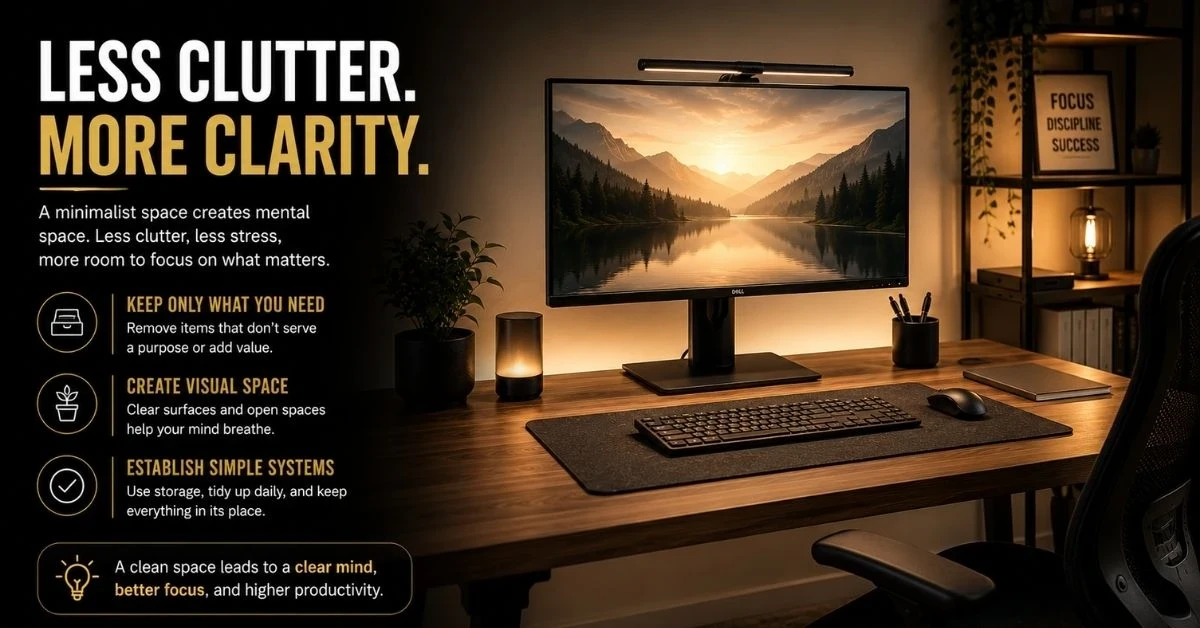
A cleaner workspace often leads to better focus, less stress, and a more organised workflow.
A cluttered workspace often creates a cluttered mind.
When your desk is filled with random papers, tangled cables, unused gadgets, unnecessary items, and constant visual distractions, your brain quietly processes it all in the background.
Over time, that overload affects your focus, motivation, stress levels, and ability to think clearly.
That is one of the reasons minimalist workspaces have become so popular — not just because they look good online, but because simpler environments are usually easier to work in for long periods.
Minimalism Is About Intentionality, Not Emptiness
Minimalism does not mean your office needs to feel cold or empty.
It simply means being more intentional about what deserves space in your environment.
A cleaner workspace helps reduce visual distractions, decision fatigue, unnecessary stress, and mental overload.
Many modern productivity struggles stem from overstimulation rather than laziness.
Your desk should support your work — not constantly compete for your attention.
Keep Only Essentials On Your Desk
One of the easiest ways to improve a workspace is removing anything you do not regularly use.
For most people, the essentials are usually:
- Laptop or monitor
- Keyboard and mouse
- Notebook
- Water bottle
- Desk lamp
- One or two personal items
Everything else can usually be stored away neatly.
This creates more working space, less visual clutter, better organisation, and easier concentration.
A simpler setup often makes focused work feel much easier.
Physical And Digital Clutter Both Matter
Messy environments quietly pull attention away throughout the day.
Even if you think you are ignoring the clutter, part of your attention is still processing it in the background.
Simple habits like organising cables, clearing old papers, removing unnecessary items, and resetting your workspace before finishing work can make a noticeable difference.
Digital clutter matters too.
Too many open tabs, desktop icons, notifications, random downloads, and unorganised files can make work feel exhausting very quickly.
Simple habits like closing unused tabs, organising folders, deleting unnecessary files, and keeping your desktop clean help create a smoother workflow.
Your computer setup should support your work — not constantly distract you from it.
Storage Solutions Make A Huge Difference
A lot of clutter exists simply because things have no proper place.
Simple storage upgrades can instantly improve your workspace.
Things like desk drawers, floating shelves, cable organisers, storage boxes, filing systems, and under-desk storage help keep everything organised without overcrowding your desk.
When everything has a place, staying organised becomes much easier.
Recommended Minimalist Desk Accessories Worth Considering
Small organisation upgrades can make your setup feel significantly cleaner without overcomplicating your workspace.
Useful additions worth considering:
- Minimalist desk organisers
- Cable management kits
- Floating shelves
- Monitor stands
- Storage drawers
- Under-desk organisers
- Desk trays
- Wireless charging stations
You Probably Need Less — Not More
One thing I honestly believe is that many people overcomplicate productivity.
They keep adding more gadgets, accessories, decorations, and distractions, yet wonder why they struggle to focus.
Sometimes the biggest productivity upgrade is simply removing what no longer serves you.
That applies to both physical clutter and mental habits that keep people stuck in survival mode for years.
A cleaner and more intentional workspace often makes it easier to focus deeply, stay organised, work comfortably, and reduce distractions.
Sometimes productivity is not about adding more.
Sometimes it is simply about removing the things quietly draining your attention every single day.
The Best Technology And Productivity Tools
Technology should make your work easier — not more distracting.
One of the biggest mistakes people make when building a home office setup is buying too many gadgets they do not actually need.
A workspace filled with unnecessary screens, random accessories, constant notifications, complicated tech setups, and visual clutter can quickly become distracting instead of productive.
The goal is not creating the flashiest office possible.
It is creating a setup that helps you stay organised, reduce distractions, improve workflow, and work more efficiently over time.
The right technology can absolutely help with that.
A Reliable Computer Setup Matters
You do not always need the most expensive laptop or desktop available.
But having a setup that runs smoothly without constant frustration makes a huge difference to your daily workflow.
A few things destroy momentum faster than slow loading times, constant lag, freezing programs, overheating laptops, and crashing software.
Reliable equipment saves both time and energy.
This becomes especially important if you run a website, work online, or spend long hours creating digital content.
The best setup depends on the type of work you do.
For example, writers and students may only need a lightweight laptop, content creators often benefit from stronger performance, traders usually prefer multiple screens, and remote workers may prioritise webcam and microphone quality.
A dependable setup removes unnecessary friction from your day.
Dual Monitors Can Improve Workflow
Once people start using dual monitors, many never want to go back.
Extra screen space reduces constant switching between tabs, documents, applications, charts, and research windows.
This can be particularly useful for trading, writing, video editing, research, remote work, and content creation, where having multiple applications visible simultaneously can significantly improve workflow and efficiency.
At the same time, more screens are not always better.
Too many monitors can be visually overwhelming and distracting, especially for people who prefer a calmer, more minimalist workspace.
A clean and functional setup usually works best.
Keyboards And Mice Matter More Than People Expect
If you spend hours typing every day, comfort becomes extremely important.
Many people upgrade from cheap keyboards and immediately notice improved typing comfort, reduced hand fatigue, and a smoother workflow.
Some people prefer mechanical keyboards.
Others prefer quieter keyboards for a less distracting setup.
The same applies to mice.
A comfortable wireless mouse can make long work sessions feel noticeably smoother and more natural.
Recommended Productivity Tech Worth Considering
A few reliable upgrades can dramatically improve your setup without overcomplicating it.
Useful technology worth considering includes:
- Wireless keyboards
- Silent mechanical keyboards
- Wireless mice
- External monitors
- USB hubs
- External SSD storage
- Webcams
- USB microphones
These upgrades work especially well for remote workers, writers, traders, students, content creators, and anyone who spends significant time working on a computer. The goal is not to fill your workspace with gadgets but to choose tools that genuinely improve comfort, organisation, and efficiency throughout the day.
Good technology should quietly improve your workflow rather than constantly demanding your attention. The best productivity tools are often the ones you barely notice because they simply work reliably in the background and help remove unnecessary friction from your daily tasks.
Webcams And Microphones For Remote Work
If you work remotely, attend online meetings, create content, or run an online business, audio and video quality matter.
You do not need a professional studio setup, but a decent webcam, USB microphone, and ring light can noticeably improve communication and professionalism.
Clear audio especially makes online meetings feel smoother and less exhausting during long workdays.
Productivity Tools That Actually Help
Many productivity tools eventually become distractions themselves.
It is easy to spend hours researching apps, watching productivity videos, testing new systems, and constantly switching between tools without actually getting meaningful work done.
The truth is that the best productivity systems are usually the simplest ones.
Helpful tools worth considering include:
- Pomodoro timers
- Digital planners
- Note-taking apps
- Calendar tools
- Task management apps
- Website blockers
The goal is not finding the perfect productivity system.
The goal is finding a system simple enough that you will actually use it consistently.
I have found that simple systems often outperform complicated ones because they reduce friction and make it easier to take action.
Many people spend years searching for the perfect routine when they would be better off choosing a basic system, sticking with it, and improving it gradually over time.
Consistency almost always beats complexity.
Choose a few tools that fit your workflow, use them regularly, and focus your energy on doing the work rather than endlessly optimising your productivity setup.
You do not need a futuristic home office filled with expensive gadgets to work effectively from home.
Reliable technology, a comfortable workspace, and a handful of tools you genuinely use every day will usually outperform an overcomplicated setup packed with unnecessary equipment.
The best productivity setup is simply one that helps you focus, stay organised, and get your work done with less stress and fewer distractions.
Creating A Cosy And Inspiring Atmosphere
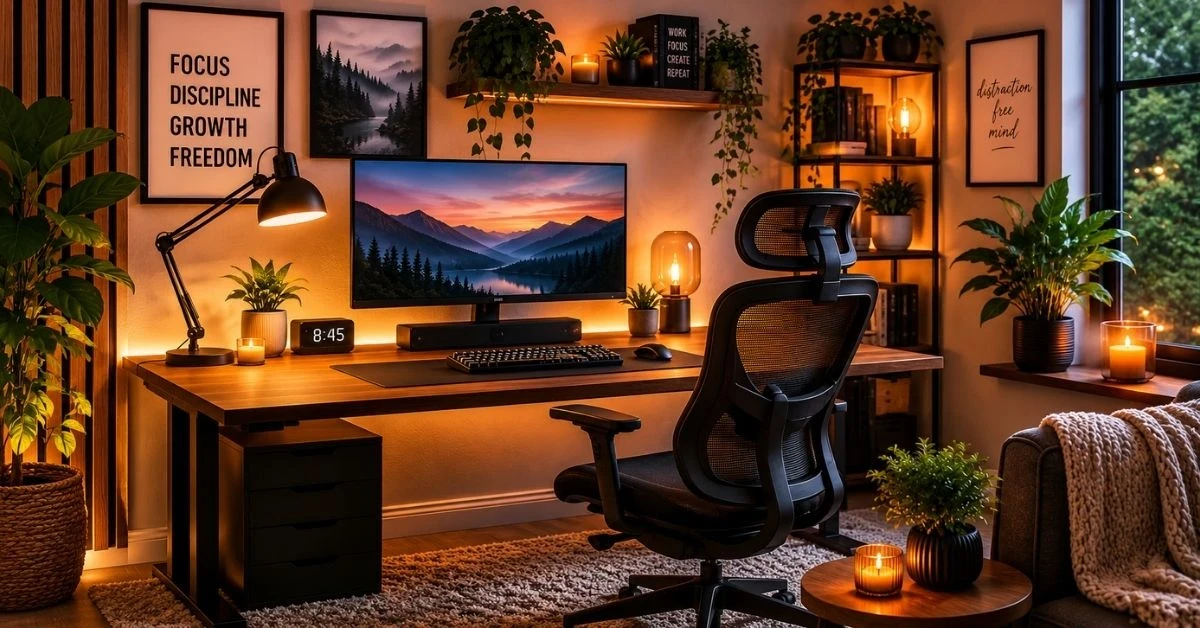
Your home office should not feel like a place you are constantly trying to escape from.
It should feel comfortable, relaxing, personal, and somewhere you genuinely enjoy spending time.
The environment around you affects far more than productivity alone.
It also influences your mood, creativity, energy levels, stress, and motivation.
A cold or lifeless workspace can make work feel draining very quickly.
But a more intentional setup can help you feel calmer, more comfortable, and better able to focus throughout the day.
One thing I have realised is that productivity is not only about discipline.
Your environment either supports your mindset — or quietly works against it.
Mindset and environment are far more connected than most people realise.
Why Atmosphere Matters
A workspace affects much more than your ability to complete tasks.
It also affects your comfort, motivation, and overall experience of working from home.
When your office feels organised and low-distraction, it becomes much easier to sit down and work consistently.
This matters even more if you work remotely, run a business from home, trade, write, study, or spend long periods working alone.
The goal is not creating a perfect Pinterest office.
It is creating a space you genuinely enjoy working in every day.
Plants Make A Bigger Difference Than People Expect
Adding plants to a workspace instantly changes the atmosphere.
Even a small plant can make your desk feel more natural, less sterile, more visually balanced, and more relaxing to work in.
Plants also soften technology-heavy setups filled with screens and office equipment.
Low-maintenance plants work especially well for home offices:
- Snake plants
- Pothos
- Peace lilies
- Small succulents
- ZZ plants
You do not need to turn your office into a jungle.
A few simple additions are usually more than enough.
Recommended Cosy Workspace Accessories Worth Considering
Small atmospheric upgrades can make a surprisingly big difference to how your workspace feels every day.
While productivity often gets the most attention, comfort and atmosphere matter too. A workspace that feels calm, inviting, and enjoyable to spend time in can make it easier to stay focused and consistent over the long term.
Useful additions worth considering:
- Indoor plants
- Essential oil diffusers
- Warm LED lighting
- Candles
- Soft rugs
- Air purifiers
- Minimal desk decor
You do not need to add everything at once.
Even one or two thoughtful additions can help create a workspace that feels more comfortable, relaxing, and inspiring to work in every day.
The goal is not filling your office with decorations.
The goal is creating an environment that supports focus, reduces stress, and makes you genuinely enjoy spending time there.
Neutral Colours Often Feel Easier To Work In
Bright and intense colours can sometimes feel overstimulating during long work sessions.
Many people naturally prefer neutral tones, earthy colours, black-and-white setups, warm lighting, and minimalist aesthetics.
These environments often feel cleaner and easier to focus in over longer periods.
That does not mean your office needs to feel boring.
It simply means creating a space that feels comfortable to you personally.
Personal Touches Without Clutter
A cosy office should still feel personal.
Simple additions like framed quotes, minimal wall art, books, candles, or small decorative items can make a workspace feel more inspiring.
The key is balance.
Too many decorations quickly become visual clutter.
A few intentional details usually feel far better than overcrowding your workspace.
Comfort Matters During Long Work Sessions
Comfort becomes increasingly important when you spend hours in the same environment every day.
Simple things like warm lighting, cushions, rugs, comfortable room temperature, and softer textures can make a noticeable difference.
A workspace that feels physically comfortable usually makes it easier to work consistently without feeling mentally drained.
Inspiration Without Overstimulation
There is a big difference between inspiring and distracting.
Some people overload their office trying to force motivation with too many quotes, bright RGB lighting, excessive decorations, and constant visual stimulation.
Cleaner environments usually work far better long term.
You want your office to feel inspiring, comfortable, intentional, and low-distraction — without overwhelming your senses.
Your home office does not need to look perfect.
It simply needs to feel like a space that supports the way you want to work and live.
Home Office Setup Ideas For Small Spaces
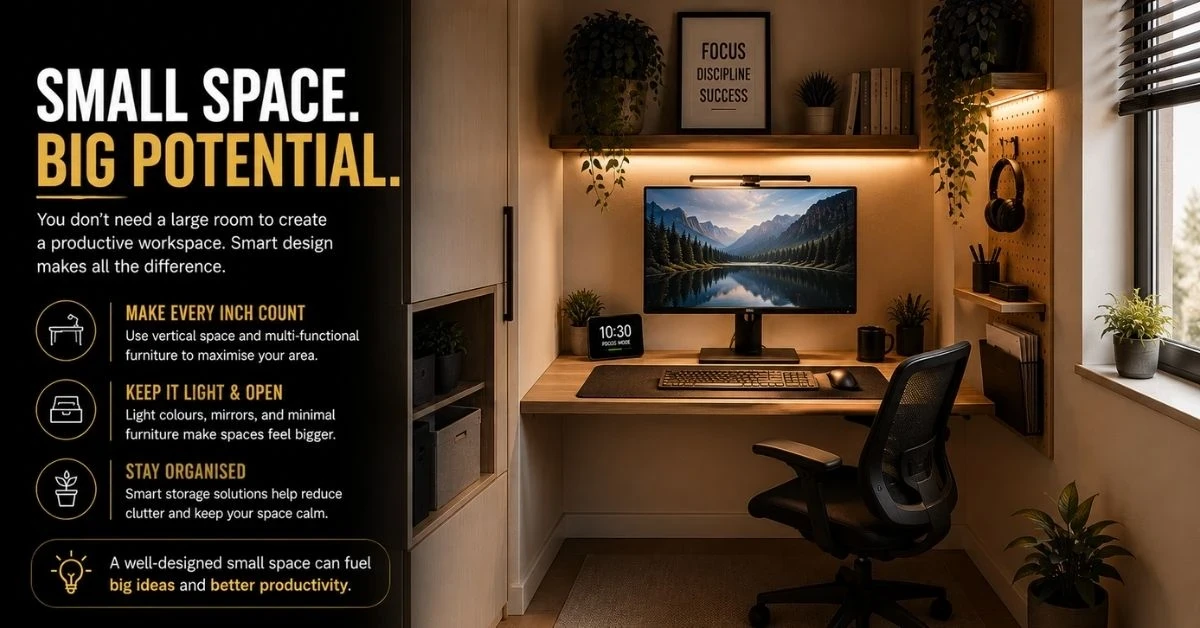
Not everyone has a dedicated office at home.
A lot of people work from bedrooms, kitchen tables, shared living spaces, small apartments, or tiny corners of a room.
And honestly, that is completely fine.
You do not need a massive office to create an effective workspace.
Some of the best home office setups are actually simple, minimal, and intentionally designed around smaller areas.
Even a small corner can become an incredibly productive place to work.
Small Spaces Require Smarter Setups
When space is limited, every item matters more.
A cluttered setup quickly feels cramped, distracting, overwhelming, and difficult to work in.
That is why simplicity becomes even more important in compact spaces.
The goal is to maximise comfort, functionality, organisation, and usable space without overcrowding the room.
A smaller setup that feels intentional and low-distraction will usually work far better than a larger workspace filled with unnecessary clutter.
Corner Desks And Compact Setups Work Extremely Well
Corner desks are one of the best options for smaller home offices because they save space, make use of awkward corners, create separation from the rest of the room, and help keep workspaces organised.
If space is extremely limited, foldable and compact desks can also work surprisingly well.
These types of setups are particularly useful for bedroom offices, apartments, student rooms, shared living spaces, and laptop-based work environments where maximising available space is important.
Minimal setups also make cleaning easier, simplify organisation, help rooms feel more open, and reduce visual distractions. In many cases, a smaller and more intentional workspace can feel more productive than a larger setup filled with unnecessary furniture and equipment.
Vertical Storage Makes A Huge Difference
When floor space is limited, vertical storage becomes incredibly useful.
Things like floating shelves, wall organisers, pegboards, under-desk storage, and stackable drawers help keep your workspace organised without taking up valuable floor space.
This is one of the easiest ways to make a small office feel more functional, less cluttered, and easier to maintain.
Lighting And Colours Matter More In Smaller Rooms
Dark spaces often feel smaller and more enclosed.
Good lighting and lighter colours help create a more open atmosphere.
Simple things like warm desk lamps, natural light, white or neutral furniture, soft lighting, and minimal clutter can make a surprisingly noticeable difference in smaller rooms.
Keep Multi-Purpose Spaces Organised
Many people now work in rooms that serve multiple purposes, such as a bedroom office, a living room workspace, or a combined gaming and work setup.
This is where boundaries become important.
Simple habits like resetting your desk after work, closing your laptop, organising cables, storing work items neatly, and creating separation between work and relaxation can make a noticeable difference.
These routines help prevent your entire home from constantly feeling like “work mode.”
Creating healthy boundaries becomes even more important when stress and overwhelm already affect your focus or energy levels.
Wireless Setups Help Smaller Spaces Feel Cleaner
Too many cables instantly make compact areas feel messy.
Wireless accessories like wireless keyboards, wireless mice, Bluetooth headphones, and wireless charging stations can make smaller setups feel noticeably cleaner.
Reducing visual clutter often makes compact workspaces much easier to focus in.
Small Space Accessories Worth Considering
Small upgrades can improve comfort, organisation, and functionality without taking up valuable space.
When working in a smaller office, apartment, bedroom, or shared workspace, every item should serve a purpose. The right accessories can help keep your setup organised while making the most of the space available.
Useful additions worth considering include floating shelves, compact desk organisers, under-desk drawers, wireless accessories, minimalist desk lamps, and storage boxes.
These simple upgrades can help reduce clutter, improve organisation, and make a compact workspace feel more comfortable and efficient.
You do not need a large office to create an effective workspace.
Often, a few well-chosen accessories can make a small setup feel significantly more organised, functional, and enjoyable to work in every day.
Minimalism Works Extremely Well In Smaller Offices
Smaller workspaces naturally encourage a more intentional setup.
You quickly realise you do not need excessive gadgets, oversized desks, multiple decorations, or complicated tech setups.
A simple desk, good lighting, comfortable seating, and proper organisation are usually more than enough.
At the end of the day, it is not really about how big your office is.
It is about whether the space helps you stay organised, work comfortably, and focus consistently without feeling overwhelmed.
My Recommended Home Office Essentials
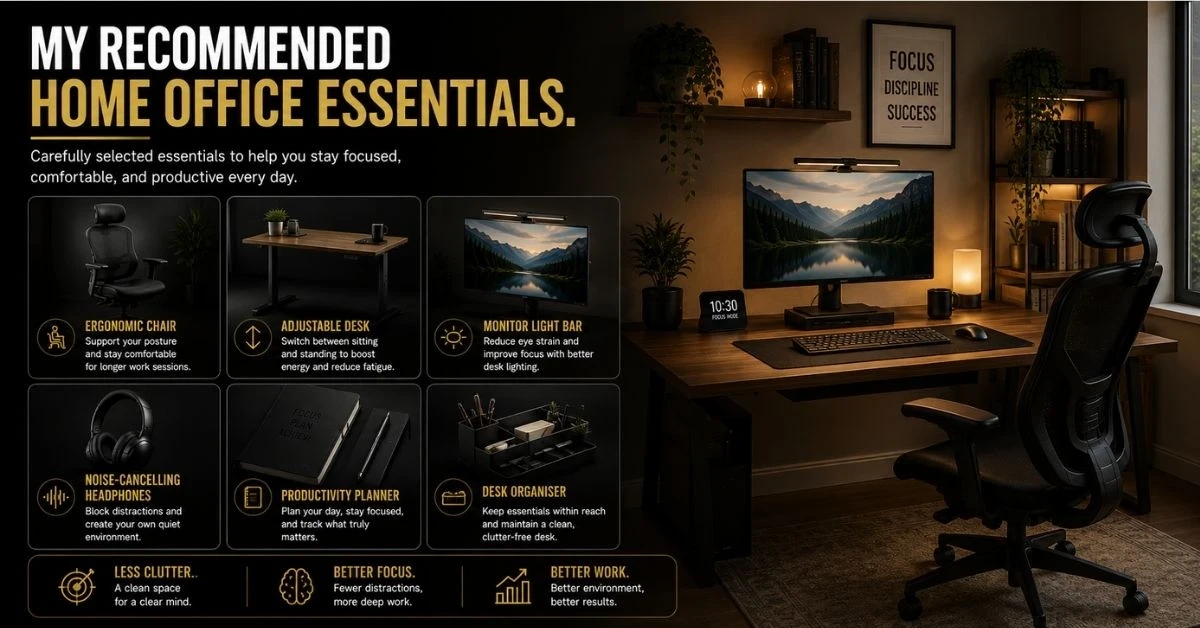
If I were building a productive home office setup from scratch today, these are the upgrades I would prioritise first.
Not because they look impressive online, but because they genuinely improve comfort, focus, organisation, and the overall experience of working from home.
You do not need to buy everything at once.
Even a few small upgrades can completely change how your workspace feels day to day.
1. Noise-Cancelling Headphones
If I could recommend only one productivity upgrade for introverts, this would be near the top of the list.
Noise-cancelling headphones help reduce distractions and make focused work much easier to maintain, especially if you work in shared spaces, have noisy neighbours, get distracted easily, or spend long hours concentrating.
Popular options include the Sony WH-1000XM5, Bose QuietComfort Ultra, Apple AirPods Max, and Soundcore Space One.
2. A Comfortable Ergonomic Chair
A good office chair is one of the best long-term investments you can make.
If you spend hours sitting at a desk, proper support matters. A comfortable chair can improve posture, reduce discomfort, and make long work sessions far more sustainable.
3. A Simple And Functional Desk Setup
Most people work better with a setup that feels clean, organised, and easy to maintain.
You do not need an oversized desk covered in gadgets. A simple desk with enough room for your essentials is usually more than enough.
4. Better Lighting
Lighting has a huge impact on comfort, focus, and eye strain.
Warm, adjustable lighting often creates a much more comfortable environment than harsh overhead lights.
5. Reliable Productivity Technology
Reliable equipment removes unnecessary frustration from your workflow.
You do not need the most expensive technology available, but having tools that work smoothly makes a noticeable difference over time.
6. Organisation And Storage Upgrades
Clutter quickly becomes distracting during long work sessions.
Simple organisation tools can make your setup feel cleaner, easier to manage, and less visually overwhelming.
7. Productivity And Focus Tools
Simple productivity systems usually work better than complicated ones.
The goal is creating enough structure to stay focused without making your setup feel overwhelming.
The best home office setups are rarely the most expensive or the most complicated.
They are usually the ones that feel comfortable, functional, organised, low-distraction, and sustainable in the long term.
A simple setup that supports your focus and energy will almost always outperform an overcomplicated workspace filled with unnecessary equipment.
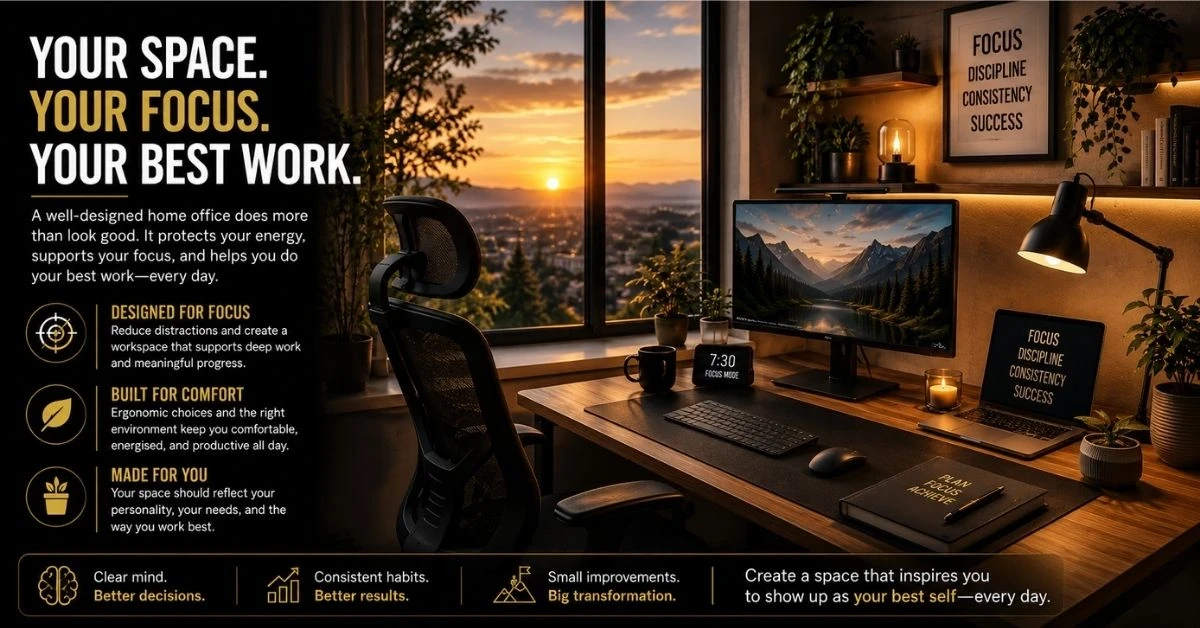
My Top Picks
These are the home office upgrades I would personally prioritise first if I were building a productive workspace from scratch today.
🥇 Sony WH-1000XM5 Headphones – My favourite upgrade for reducing distractions and improving focus.
🥈 FlexiSpot Standing Desk – Excellent balance of quality, features, and value.
🥉 BenQ Monitor Light Bar – One of the easiest ways to reduce eye strain and improve desk comfort.
🏅 SIHOO Ergonomic Chair – Great comfort and support without the premium price tag.
Frequently Asked Questions
What is the best home office setup for introverts?
The best setup is usually one that feels quiet, comfortable, organised, and low-distraction. Introverts often work best in environments that support deep focus and reduce overstimulation.
Do I need an expensive home office setup?
No. Most people can dramatically improve their workspace with small upgrades like better lighting, a comfortable chair, less clutter, and improved organisation.
Are standing desks worth it?
For many people, yes. Standing desks can help improve movement, posture, and energy levels during long work sessions.
How can I make my home office less distracting?
Reducing noise, decluttering your desk, turning off notifications, and keeping your setup simple can make a huge difference to focus and productivity.
What lighting is best for a home office?
Natural light and warm adjustable lighting usually work best. Good lighting helps reduce eye strain and makes long work sessions feel more comfortable.
Do noise-cancelling headphones improve productivity?
They can help significantly, especially in shared spaces or noisy environments. Many people find it much easier to focus when background noise is reduced.
How do I create a home office in a small space?
Even a small corner can become an effective workspace. Compact desks, vertical storage, wireless accessories, and minimal clutter usually work very well in smaller rooms.
What are the most important home office upgrades?
A comfortable chair, good lighting, a functional desk setup, reduced distractions, and better organisation are usually the upgrades that make the biggest long-term difference.
Conclusion
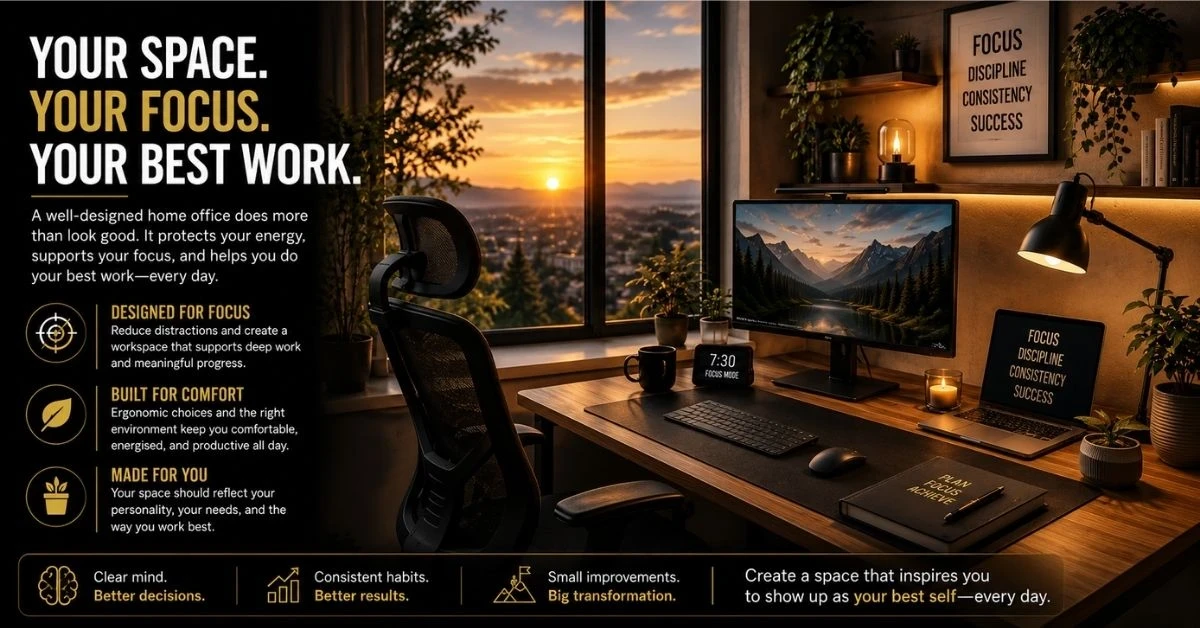
Your home office setup affects far more than productivity alone.
It influences your focus, energy, mood, creativity, stress levels, and overall wellbeing throughout the day.
A noisy, cluttered, or overstimulating workspace can quietly drain your attention without you fully realising it.
But a more intentional setup can make working from home feel more comfortable, focused, less mentally exhausting, and far easier to sustain long term.
You Do Not Need A Luxury Office
The good news is you do not need a massive budget, a huge office, expensive gadgets everywhere, or a perfect Pinterest setup.
Most of the time, the biggest improvements come from simple changes such as better lighting, less clutter, greater comfort, fewer distractions, better organisation, and clearer boundaries between work and rest.
Small improvements often create the biggest long-term difference.
One thing I have realised is that productivity becomes much easier when your environment supports you instead of constantly working against you.
That is why the best home office setups for introverts are usually simple, comfortable, quiet, functional, organised, and low-distraction.
Not overloaded with unnecessary gadgets or visual clutter.
Just designed to help you think clearly, work comfortably, stay consistent, and protect your energy throughout the day.
Because working from home becomes much harder when your environment constantly pulls your attention in different directions.
Build Your Setup Gradually
You do not need to create the perfect office overnight.
Start simple and improve one thing at a time.
Upgrade your chair. Improve your lighting. Reduce distractions. Organise your desk. Create healthier routines.
These small upgrades add up far faster than most people expect.
Over time, your workspace starts to feel less like somewhere you have to work — and more like an environment that genuinely supports your goals, focus, and overall well-being.
The Real Goal Is Not Perfection
At the end of the day, your office does not need to look impressive online.
It simply needs to support the kind of life and work you are trying to build.
An organised and intentional workspace often leads to better focus, less stress, more consistency, clearer thinking, and a healthier relationship with work.
And honestly, that matters far more than having the trendiest setup online.
The real goal is not creating an office that simply looks productive.
Real productivity usually comes from consistency, discipline, and creating systems that actually support your life long term.
It is about creating a space that helps you work consistently, think clearly, and maintain your energy over time.
If consistency is something you struggle with, you may also enjoy my article How To Stay Consistent When Life Gets Overwhelming.
Thank you for taking the time to read this article.
I hope it gave you useful ideas for building a workspace that feels more comfortable, focused, and sustainable long term.
If you have any questions, feel free to leave a comment or get in touch.
Remember, you do not need to create the perfect workspace overnight. Start with one improvement, build momentum, and let your environment evolve alongside your goals.
Thanks again for reading.
— Vlad
If you’re improving your home office one step at a time, start with the upgrades that will have the biggest impact on your daily comfort and focus. Small, consistent improvements often create the biggest long-term results.
Related Articles You May Also Like
If you enjoyed this article, you may also find these guides helpful:
- Noise Cancelling Headphones: Benefits For Introverts
- The Dopamine Trap: Why Modern Life Is Destroying Your Focus
- The Best Planners For ADHD Introverts
- How To Stay Consistent When Life Gets Overwhelming
- How To Build Self-Discipline When You Have ADHD
- Motivation Vs Discipline: Why Discipline Is The Real Key To Success
- Best Trading Desk Setups For Traders In 2026
- Mind And Body Wellness: 20 Essential Habits For A Healthier You
Enjoyed this article?
Join the Introvert Evolution newsletter for practical tips on productivity, discipline, focus, personal growth, trading, and building a better future — delivered straight to your inbox.