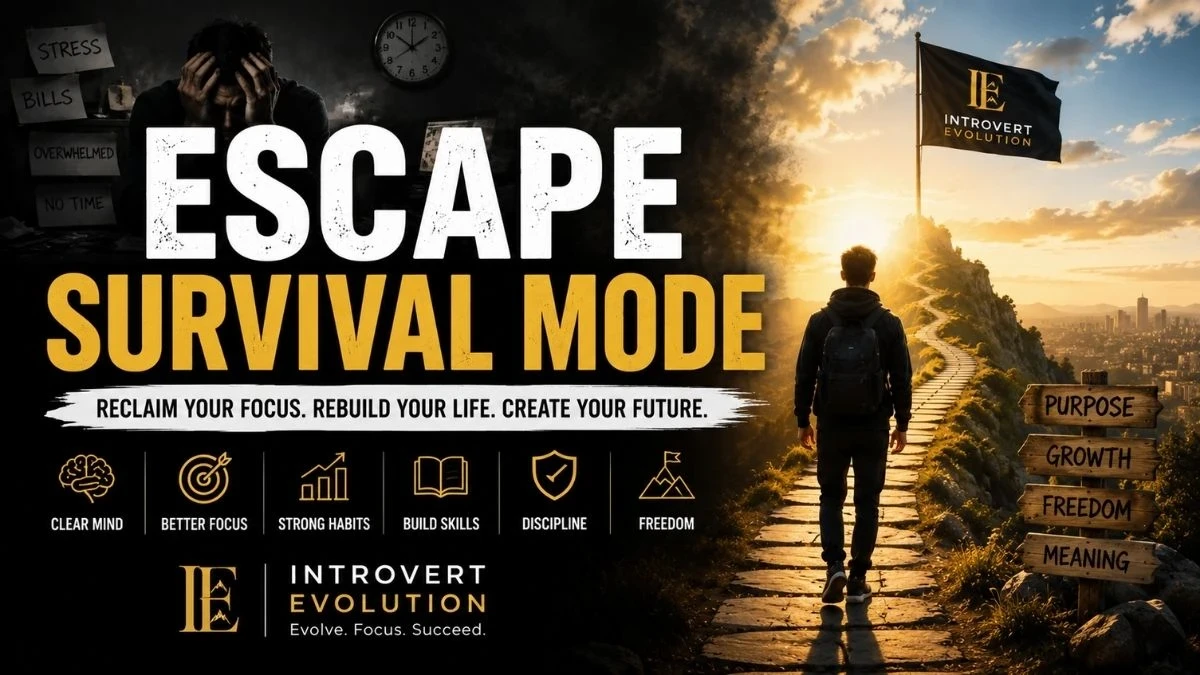
A lot of people today are stuck in survival mode without even realising it.
They wake up stressed, rush through the day exhausted, distract themselves at night, and repeat the cycle. Work drains their energy. Bills create pressure. Their minds feel overloaded. Deep down, they know they want more from life, but they feel too mentally exhausted to know where to begin.
Over time, survival mode becomes normal.
You stop thinking long-term. You stop focusing on growth, goals, and the future you truly want. Instead, life becomes about getting through the day, avoiding stress, and chasing small distractions just to cope.
The problem is that survival mode is supposed to be temporary.
It is a state your mind and body enter during difficult periods, not a permanent lifestyle. Staying there too long slowly destroys your motivation, confidence, discipline, focus, and potential.
I know what survival mode feels like because I spent years living that way myself — constantly exhausted, distracted, and focused only on getting through the next day.
The good news is that you can escape it.
Not through overnight success or motivation alone, but through small daily actions, better habits, stronger discipline, and learning how to rebuild your life one step at a time. If motivation has failed you before, you may also find my article on Motivation vs Discipline: Why Discipline Is The Real Key To Success helpful.
In this article, you will learn how to escape survival mode, regain control of your energy and focus, and start building a future that feels meaningful instead of just manageable.
Some links in this article may be affiliate links, which means I may earn a small commission at no extra cost to you. I only recommend tools and books I genuinely believe can help improve focus, discipline, and personal growth.
What Survival Mode Actually Looks Like
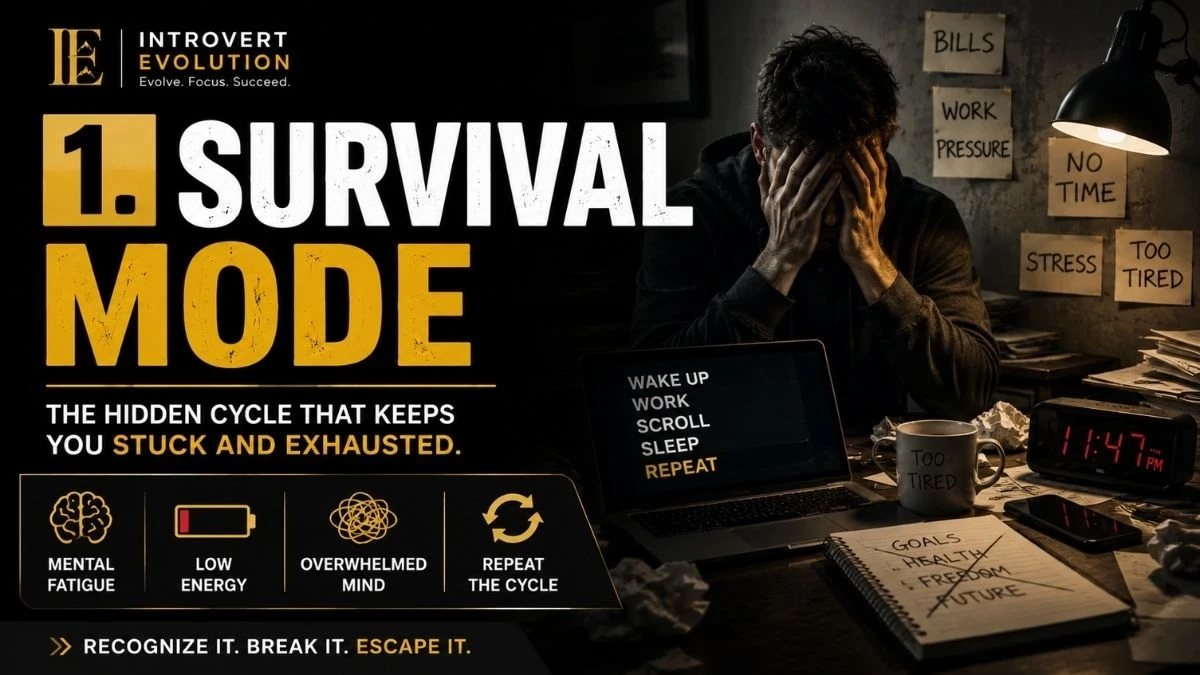
A lot of people are living in survival mode without even realising it.
They think feeling constantly stressed, mentally drained, distracted, anxious, and overwhelmed is just a normal part of adult life. Over time, survival mode becomes familiar, and people stop questioning it. They adapt to exhaustion instead of changing the habits and environments causing it.
The problem is that survival mode slowly disconnects you from growth.
You stop thinking long-term. You stop focusing on your health, goals, and future because all your energy goes toward simply getting through the day. Instead of living intentionally, you become reactive — constantly responding to stress, work, bills, notifications, and pressure.
Signs You May Be Living in Survival Mode
One of the biggest signs is constant mental fatigue. Even after resting, you still feel drained. Your focus disappears quickly, small tasks feel overwhelming, and motivation becomes difficult to maintain.
Other common signs include:
- Poor sleep
- Emotional exhaustion
- Procrastination
- Low confidence
- Lack of direction
- Constantly feeling “behind”
- Relying on distractions to cope
- Losing excitement for life
Many people also develop unhealthy coping habits like endless scrolling, binge watching, emotional eating, overspending, or staying constantly busy just to avoid slowing down and thinking.
If procrastination is one of your biggest struggles, read my guide on Understanding And Managing Procrastination: A Guide For Introverts.
For introverts especially, constant stimulation and lack of recovery time can quietly lead to burnout. If this feels familiar, read How to Recharge Your Energy As an Introvert.
Why So Many People Stay Stuck
Modern life constantly pushes people into survival mode.
Financial pressure, stressful jobs, digital overload, unhealthy environments, and nonstop distractions keep the nervous system in a constant state of stress. Social media and short-form content also train people to seek quick dopamine hits rather than long-term growth.
On top of that, many people were never taught how to build discipline, emotional resilience, financial intelligence, or a long-term vision for their life.
That is why so many people stay stuck for years.
Not because they are lazy or incapable — but because survival mode drains the exact energy needed to create change.
The Dangerous Part Nobody Talks About
The most dangerous thing about survival mode is not the stress itself.
It is how normal it eventually becomes.
At first, you notice the exhaustion, anxiety, lack of motivation, and mental burnout. But after living this way for long enough, your brain adapts. Chaos becomes familiar. You stop expecting life to feel calm, purposeful, or fulfilling.
That is where people become trapped.
They begin believing life is simply:
- wake up exhausted
- work all day
- distract yourself at night
- repeat forever
Over time, survival mode slowly lowers your standards.
You stop chasing goals that once excited you. You stop taking risks. You stop believing big change is possible. You settle for coping instead of growing.
Survival Mode Makes You Reactive
When your nervous system is constantly stressed, your brain focuses on short-term comfort instead of long-term progress.
That is why people in survival mode often:
- Procrastinate important goals
- Avoid difficult decisions
- Seek constant distraction
- Struggle with discipline
- Stay in unhealthy environments
- Wait endlessly for the “right time”
Instead of building a future intentionally, they spend all their energy reacting to life.
The Cost of Staying Stuck
Most people underestimate how expensive survival mode really is.
Not just financially — but mentally, emotionally, physically, and spiritually.
The longer you stay stuck there, the more it costs you:
- Lost opportunities
- Damaged health
- Weakened confidence
- Poor habits
- Emotional exhaustion
- Unrealized potential
And perhaps the biggest loss of all is this: You slowly begin forgetting who you could have become.
The truth is, most people do not need more motivation. They need recovery. They need clarity. They need structure. They need an environment that fosters growth rather than constant exhaustion.
Because you cannot build a meaningful future while spending every day mentally trying to survive.
You Cannot Build a Better Life With an Exhausted Mind
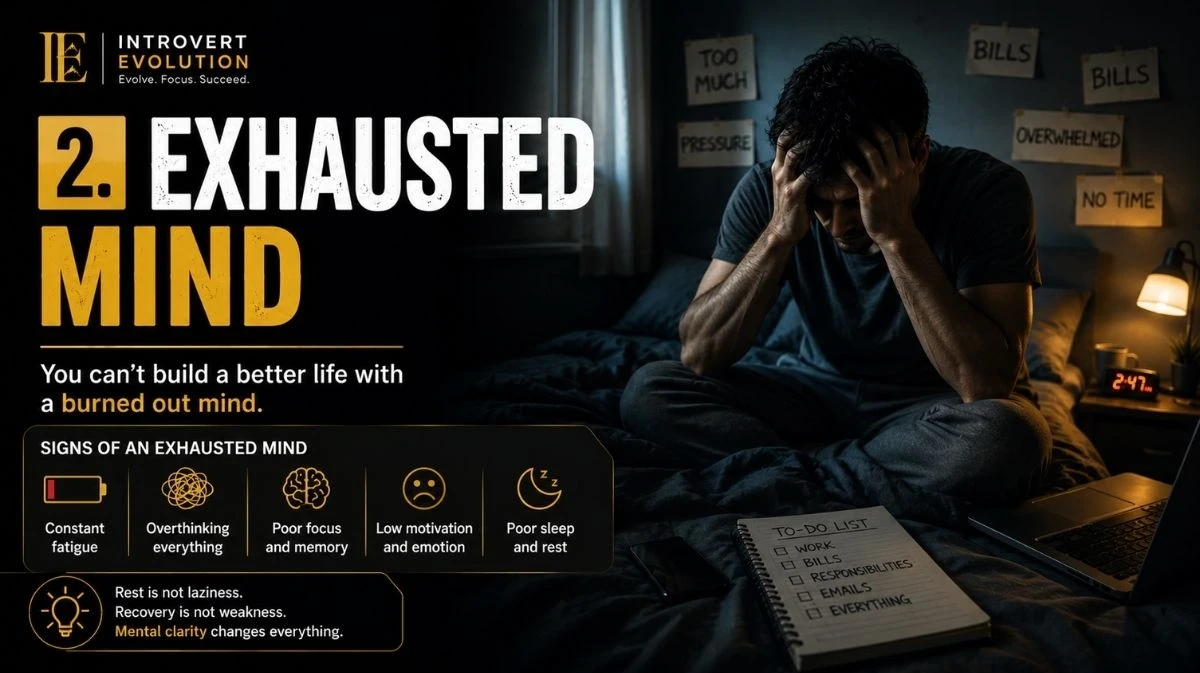
One of the biggest mistakes people make is trying to improve their life while mentally and emotionally exhausted.
They keep pushing harder, forcing productivity, chasing motivation, and blaming themselves for a lack of discipline — when, in reality, their nervous system is overwhelmed. Their mind never gets a chance to slow down, recover, or think clearly.
You cannot make strong long-term decisions from a constantly stressed state.
An exhausted mind looks for comfort, not growth. That is why people often fall into procrastination, distractions, emotional eating, endless scrolling, or impulsive habits when they are burned out.
Rest is not laziness. Recovery is not weakness. Mental clarity is one of the most valuable things you can build.
Modern Life Is Overstimulating Your Brain
Most people overload their minds from the moment they wake up.
Before they even focus on their own goals, they are already consuming:
- Notifications
- Social media
- Emails
- Messages
- News
- Short-form videos
- Other people’s opinions
Their brain never gets silent.
Over time, constant stimulation destroys focus, creativity, emotional balance, and the ability to think deeply. Many people are physically resting but mentally overstimulated throughout the day.
For introverts especially, this can become exhausting very quickly. Without enough quiet recovery time, burnout builds silently in the background.
Simple Ways to Reset Your Mind
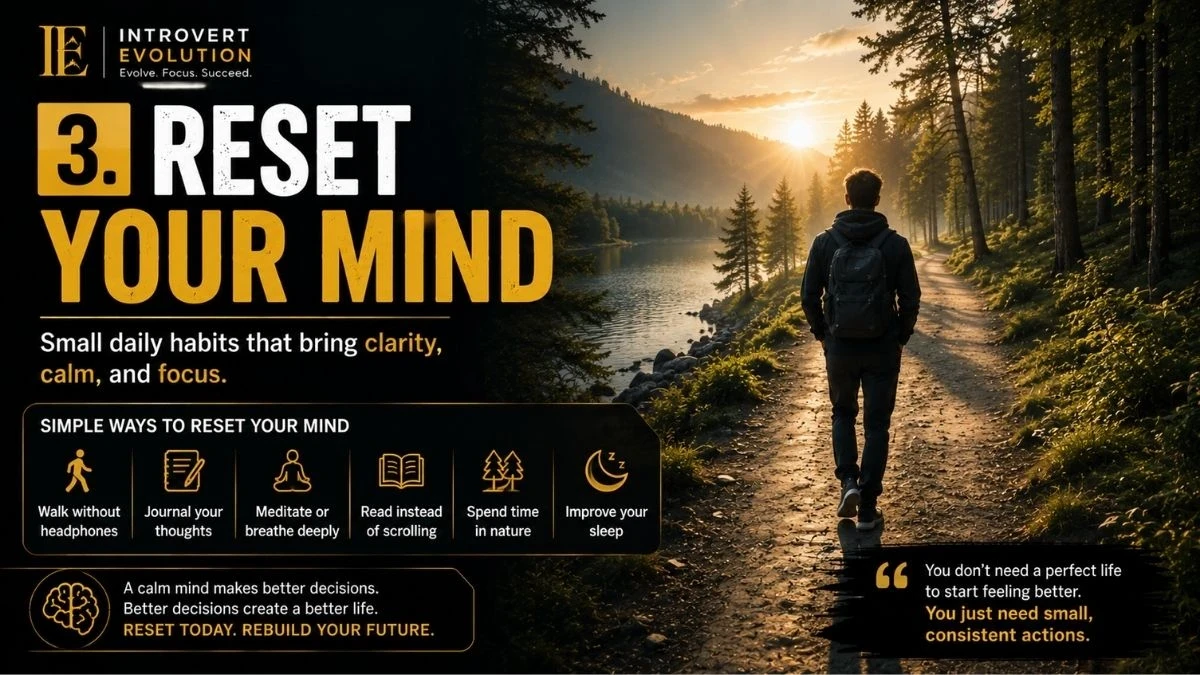
You do not need a perfect life to start recovering mentally.
Small daily habits can dramatically improve your energy, focus, and emotional state over time. When your mind is constantly overloaded, even simple moments of silence, movement, and recovery can make a huge difference.
Simple ways to reset your mind include:
- Walking without headphones
- Journaling your thoughts
- Exercising regularly
- Reducing social media usage
- Reading instead of scrolling
- Spending time in nature
- Improving sleep quality
- Meditation or deep breathing
- Creating screen-free mornings
These habits may seem small, but they slowly help pull your mind out of constant stress mode.
For more simple lifestyle habits that support energy, focus, and wellbeing, read Mind And Body Wellness: 20 Essential Habits For A Healthier You.
Sometimes, having the right tools can also make it easier to stick to these habits. Things like a simple daily journal, blue-light-blocking glasses, noise-cancelling headphones, meditation books, habit trackers, or a Kindle for distraction-free reading can help create a calmer, more focused environment.
Recommended Tools for Mental Clarity
- Guided journals for reflection and mindfulness
- Noise-cancelling headphones for focus and quiet time
- Blue light blocking glasses for better sleep and reduced eye strain
- Kindle or physical self-development books
- Habit trackers and planners
- Meditation or breathing apps
- Yoga mats and home workout equipment
The goal is not to buy more things. The goal is to create an environment that supports recovery, focus, and long-term growth instead of constant mental exhaustion.
Recovery Creates Better Decisions
When your mind becomes calmer, everything improves.
You think more clearly. You become less reactive. You regain focus. You make better decisions. You stop chasing constant dopamine. You start thinking long-term again.
That is why recovery should never be treated as optional.
A clear mind is one of the foundations of discipline, consistency, productivity, and personal growth. Before trying to completely change your life, focus on rebuilding your energy first.
Because the version of you that feels calm, focused, and mentally clear will always make better decisions than the version of you that is permanently exhausted.
Start Creating Stability Before Chasing Big Goals
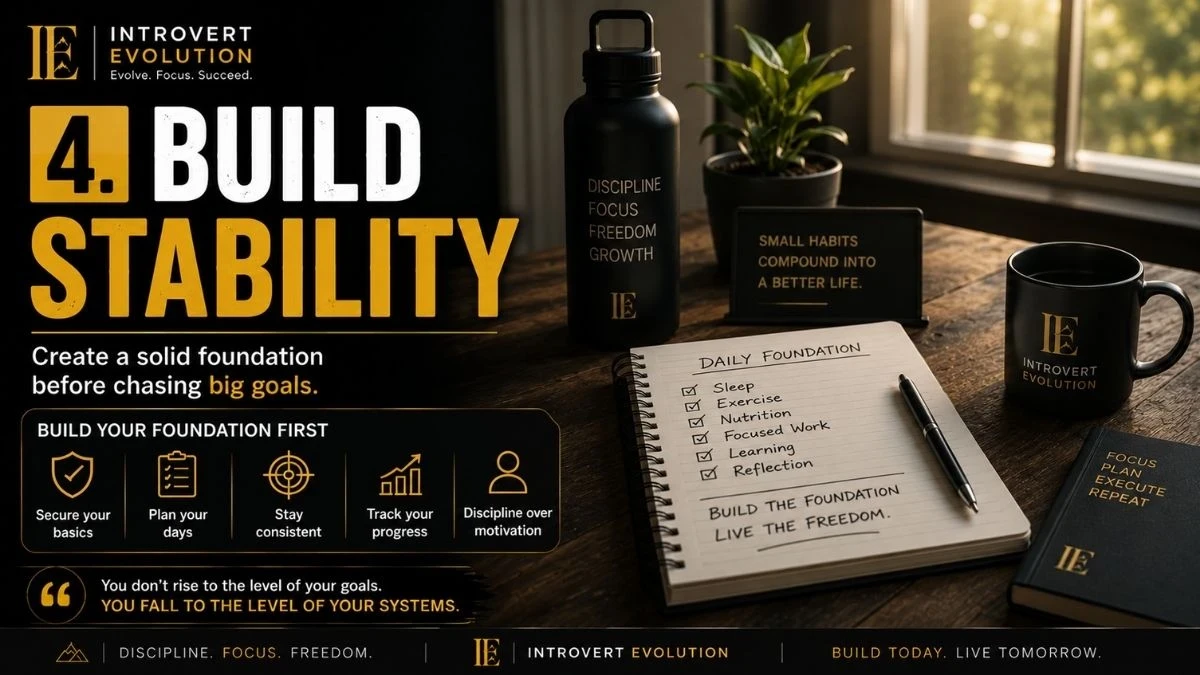
One of the biggest reasons people struggle to change their lives is that they try to build massive goals on top of unstable foundations.
They want to transform their body, build wealth, start a business, or completely reinvent themselves while sleeping badly, stressed about money, mentally overwhelmed, and living in constant chaos.
That approach rarely lasts.
Before chasing huge goals, focus on creating stability first.
Not perfection. Not the perfect routine. Just enough structure to stop feeling like your life is constantly falling apart.
Stability Creates Momentum
When your life feels chaotic, even simple tasks become mentally exhausting. Your brain uses energy dealing with stress instead of focusing on growth.
That is why simple habits matter more than most people realise.
Things like:
- Waking up consistently
- Improving sleep
- Drinking more water
- Cleaning your environment
- Budgeting your money
- Exercising regularly
- Planning your week
- Reducing distractions
These habits may seem small, but they create stability — and stability creates momentum.
This is also why small habits matter so much. I explain this in greater depth in The Power Of A 2-Minute Plank A Day.
Once your life becomes slightly more organised, your mind has more energy available for bigger goals.
Stop Waiting for Motivation
Many people stay stuck because they keep waiting to “feel ready.”
They wait for motivation. They wait for confidence. They wait for the perfect time.
Meanwhile, years pass.
The truth is that discipline usually comes before motivation. Small consistent actions create momentum, and momentum creates motivation — not the other way around.
You do not need to completely change your life overnight.
You just need to start proving to yourself that you can trust your own actions again.
That might mean:
- Walking 20 minutes daily
- Reading 10 pages a day
- Saving a small amount weekly
- Going to bed earlier
- Spending less time on your phone
Small wins rebuild self-respect.
If consistency is something you struggle with, especially during stressful seasons, read How To Stay Consistent When Life Gets Overwhelming.
Focus on Becoming 1% Better
Most people fail because they try to change everything at once.
They create extreme routines, unrealistic expectations, and impossible schedules, then burn out quickly.
Real transformation usually happens much more slowly.
It is built through small, consistent improvements over time.
One better decision becomes a better habit. One better habit becomes a better routine. One better routine becomes a different lifestyle.
That is how people escape survival mode.
Not through motivation spikes or overnight success — but through small, consistent actions repeated day after day.
Stop Escaping Through Cheap Dopamine
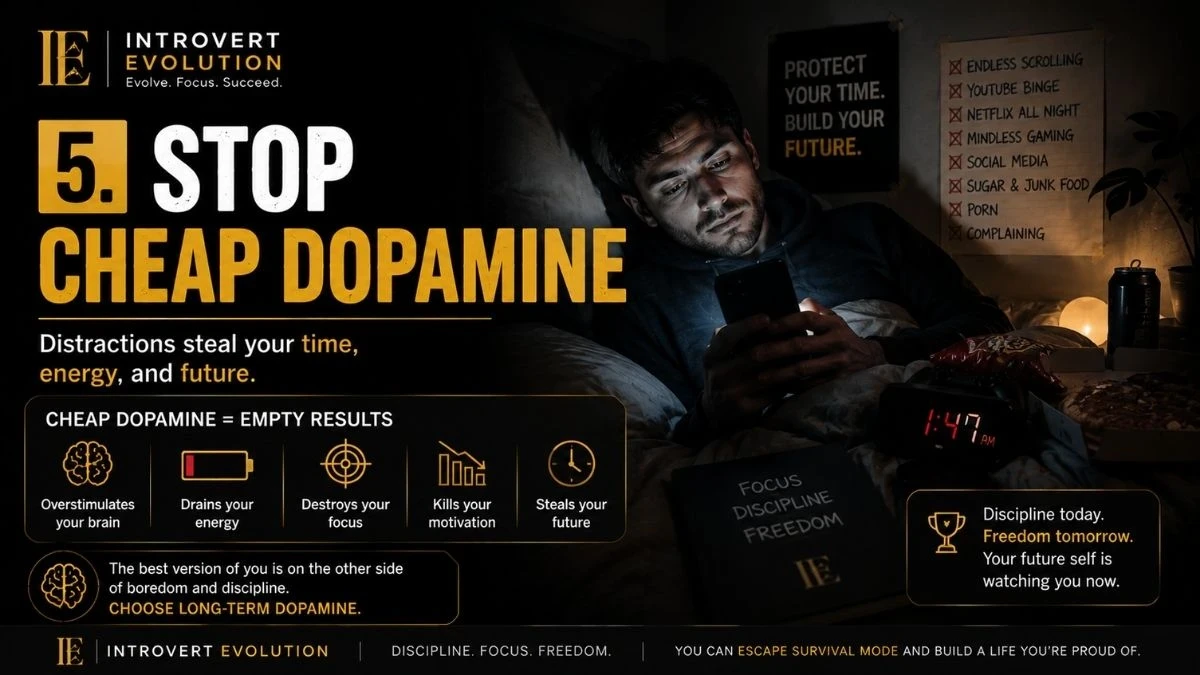
One of the biggest reasons people stay trapped in survival mode is that they spend most of their free time escaping reality instead of improving it.
Modern life offers unlimited distractions.
The moment stress, boredom, loneliness, or discomfort appear, there is always something available to numb it:
- Social media
- Short-form videos
- Junk food
- Binge watching
- Gambling
- Shopping
- Endless scrolling
- Constant entertainment
These things create quick dopamine hits — temporary feelings of pleasure and escape. The problem is that cheap dopamine slowly destroys your ability to focus, stay disciplined, and work toward long-term goals.
You begin craving instant gratification instead of meaningful progress.
The Dopamine Trap
Your brain adapts to what you consistently feed it.
If you spend hours consuming fast-paced entertainment and instant rewards, normal life starts to feel boring. Reading becomes harder. Deep work feels uncomfortable. Building skills requires more effort and patience than your brain wants to give.
That is why many people struggle to stay consistent today.
Their attention span has been trained for stimulation rather than discipline.
Instead of improving their future, they stay trapped in a cycle of: stress → distraction → temporary relief → guilt → repeat
Consumption Keeps You Passive
Most people consume far more than they create.
They watch other people become successful while their own goals remain untouched.
Consumption can feel productive because it creates the illusion of progress, but information alone changes nothing without action.
Real growth starts when you spend more time creating than consuming.
That could mean:
- Writing
- Learning skills
- Exercising
- Journaling
- Reading books
- Building a business
- Improving your finances
- Practising a craft
Creation builds confidence because it moves your life forward.
Reclaim Your Attention
Your attention is one of your most valuable assets. I cover this in more depth in The Dopamine Trap: Why Modern Distractions Are Destroying Your Focus.
Every app, platform, and algorithm is constantly competing for it. The more distracted you become, the less energy you have available for your own future.
That is why protecting your focus is now a form of self-discipline.
You do not need to remove all entertainment from your life. But you do need boundaries and awareness.
Ask yourself:
- Is this helping me grow or helping me escape?
- Am I creating or only consuming?
- Is this moving me closer to the life I want?
Small changes in how you use your attention can completely change the direction of your future.
Because when you spend less time escaping and more time building, survival mode slowly begins to lose its grip on your life.
Build a Vision Bigger Than Your Current Situation
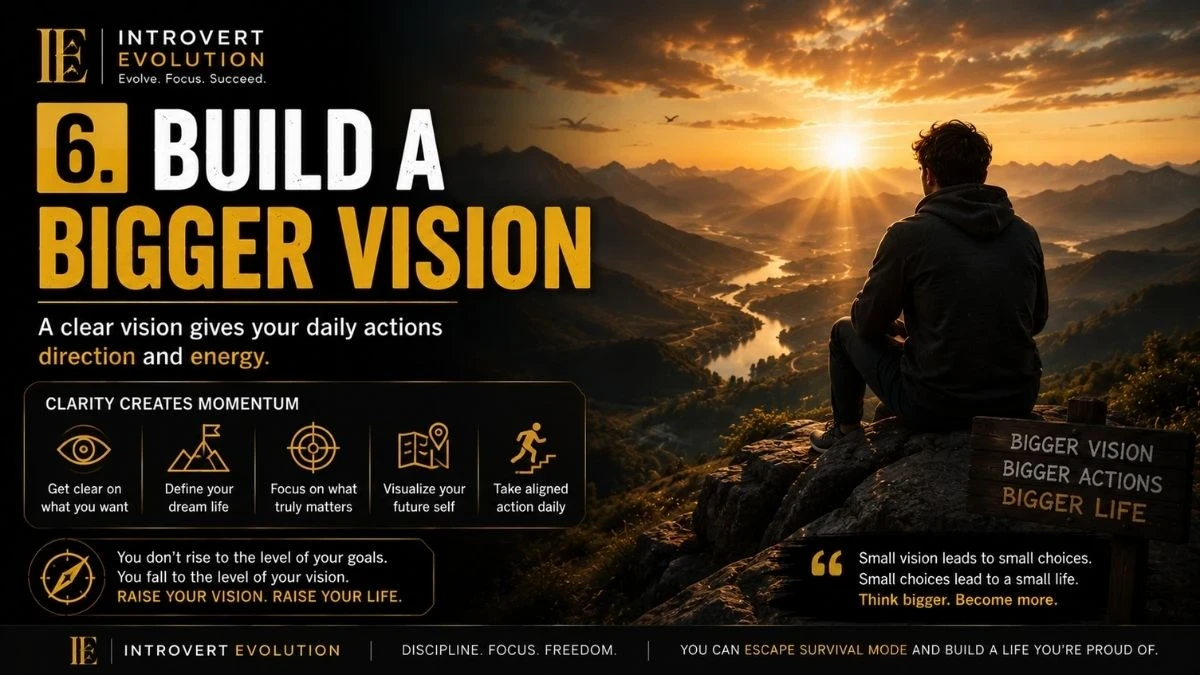
One of the hardest parts about survival mode is that it shrinks your vision.
When you are constantly stressed, exhausted, distracted, or overwhelmed, your brain focuses only on immediate problems. You think about getting through today, paying bills, surviving work, or making it to the weekend. Long-term thinking slowly disappears.
That is why many people stay stuck for years.
Not because they lack potential — but because they stop imagining a bigger future for themselves.
Most People Never Decide What They Truly Want
They move through life reacting instead of choosing.
They follow routines they dislike. Stay in environments that drain them. Accept habits that make them unhappy. Work jobs they hate without a long-term plan to escape.
Then one day, they wonder where the years went.
Building a better future starts with asking yourself difficult questions:
- What kind of life do I actually want?
- What would make me feel fulfilled?
- What kind of person do I want to become?
- What skills should I build?
- What environment would help me grow?
- What would my ideal day look like?
Without a vision, people drift.
Vision Creates Energy
When you have something meaningful to work toward, life changes.
You become more disciplined. You tolerate discomfort better. You waste less time. You start making decisions differently.
A strong vision gives your daily actions direction.
It does not mean life becomes easy overnight, but it does mean you stop surviving randomly and start building intentionally.
Your Future Is Built Through Small Daily Actions
Most meaningful transformations take time.
The problem is that most people quit too early because they expect immediate results. Real growth often happens quietly in the background before anyone notices it.
A better future is usually built through simple actions repeated consistently:
- Learning daily
- Improving your health
- Saving money
- Building skills
- Protecting your focus
- Creating better habits
- Making slightly better decisions every day
At first, nothing seems to change.
Then one day you realise:
- Your mindset is stronger
- Your confidence has grown
- Your habits are healthier
- Your life is moving in a completely different direction
That is how real transformation happens.
Not through one huge breakthrough, but through hundreds of small decisions aligned with a bigger vision.
Think Beyond Your Current Circumstances
Your current situation is not your final destination.
A difficult season does not mean a difficult life forever. Many people become trapped because they start to identify with their struggles rather than seeing them as temporary chapters.
The version of you that exists five years from now will largely be shaped by:
- What you focus on daily
- The habits you repeat
- The skills you build
- The environment you tolerate
- The vision you commit to
The moment you start thinking beyond survival is the moment you begin rebuilding your future.
Build Systems Instead of Relying on Motivation
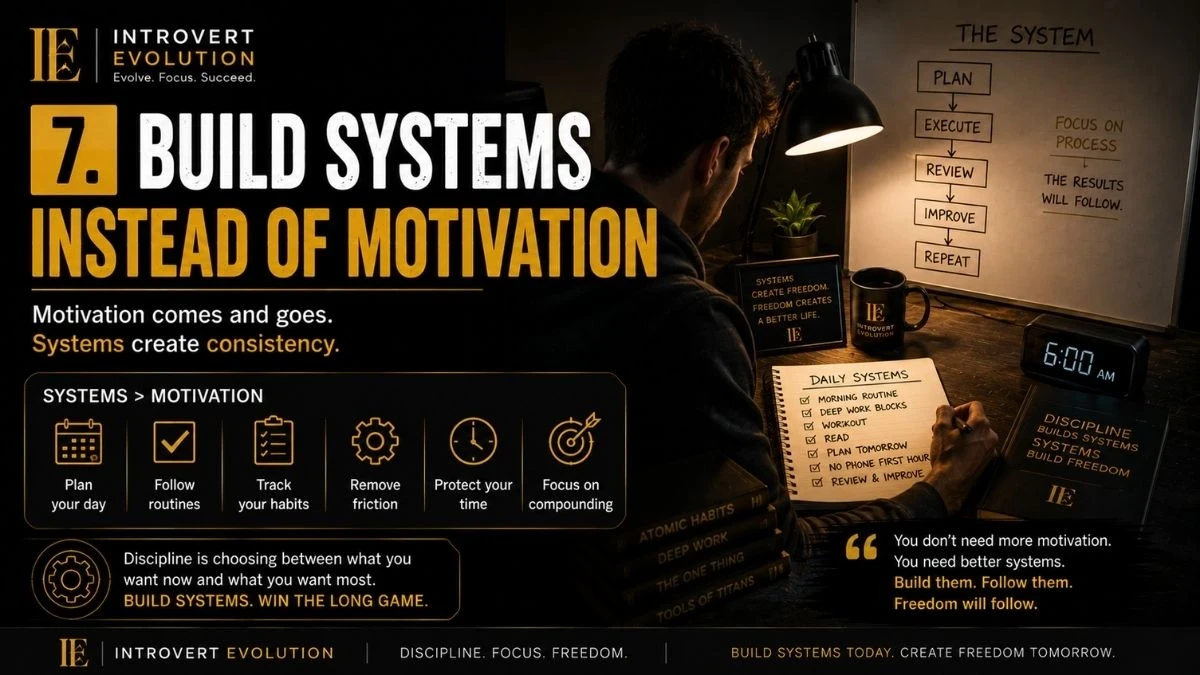
One of the biggest lies people believe is that successful people feel motivated all the time.
They do not.
The difference is that disciplined people build systems that keep them moving forward even when motivation disappears.
Motivation is emotional. Systems are structural.
Some days you feel inspired. Other days you feel tired, distracted, stressed, or overwhelmed. If your future depends entirely on how you feel each day, consistency becomes almost impossible.
That is why systems matter.
Systems Reduce Mental Chaos
Many people waste huge amounts of mental energy making the same decisions every day:
- When to wake up
- When to train
- What to eat
- When to work
- When to create
- When to rest
The more chaotic your routines are, the harder discipline becomes.
Systems simplify your life.
When important habits become automatic, you stop constantly negotiating with yourself. You remove unnecessary friction and create consistency through structure instead of emotion.
Simple systems that can completely change your life include:
- Morning routines
- Workout schedules
- Weekly planning
- Budgeting systems
- Fixed sleep routines
- Meal preparation
- Content calendars
- Daily reading habits
These systems may seem small, but together they create stability and momentum.
Tools That Help Build Better Systems
Building better habits becomes easier when you reduce friction and create an environment that supports consistency. Simple tools like planners, habit trackers, desk organisers, whiteboards, productivity books, and time-blocking calendars can help you stay focused and organised, rather than constantly feeling overwhelmed.
Recommended tools:
- Daily planners and productivity journals
- Habit trackers and wall calendars
- Whiteboards for weekly planning
- Desk organisers and minimalist workspace tools
- Pomodoro timers and focus tools
- Productivity and discipline books
The goal is not perfection. The goal is to create systems that make consistency easier to maintain.
If you struggle with focus, routines, or ADHD-style inconsistency, read How To Build Self-Discipline When You Have ADHD.
Discipline Creates Freedom
A lot of people think discipline feels restrictive.
In reality, lack of discipline creates far more stress.
Without discipline:
- Finances become chaotic
- Health declines
- Procrastination grows
- Opportunities disappear
- Anxiety increases
- Goals stay unfinished
Discipline is not punishment. It is self-respect.
The disciplined version of you protects your future instead of constantly sacrificing it for short-term comfort.
Make Progress Sustainable
One reason people fail is that they make self-improvement too extreme.
They create impossible routines and unrealistic expectations, then burn out after a few weeks.
Good systems should feel repeatable.
It is better to train three times per week consistently for years than to train every day for one month and quit.
It is better to publish one article every week consistently than disappear for months trying to do everything perfectly.
The goal is not intensity. The goal is sustainability.
Build a Life That Supports Your Future
Your systems should support the future you want to create.
If you want better health, create systems around sleep, movement, and nutrition.
If you want financial freedom, create systems for budgeting, saving, learning, and skill-building.
If you want to grow a business or personal brand, create systems around creating, publishing, and consistency.
That is how people slowly escape survival mode: Through structure, discipline, and repeated actions that align with the future they want to build.
Learn Skills That Increase Your Freedom
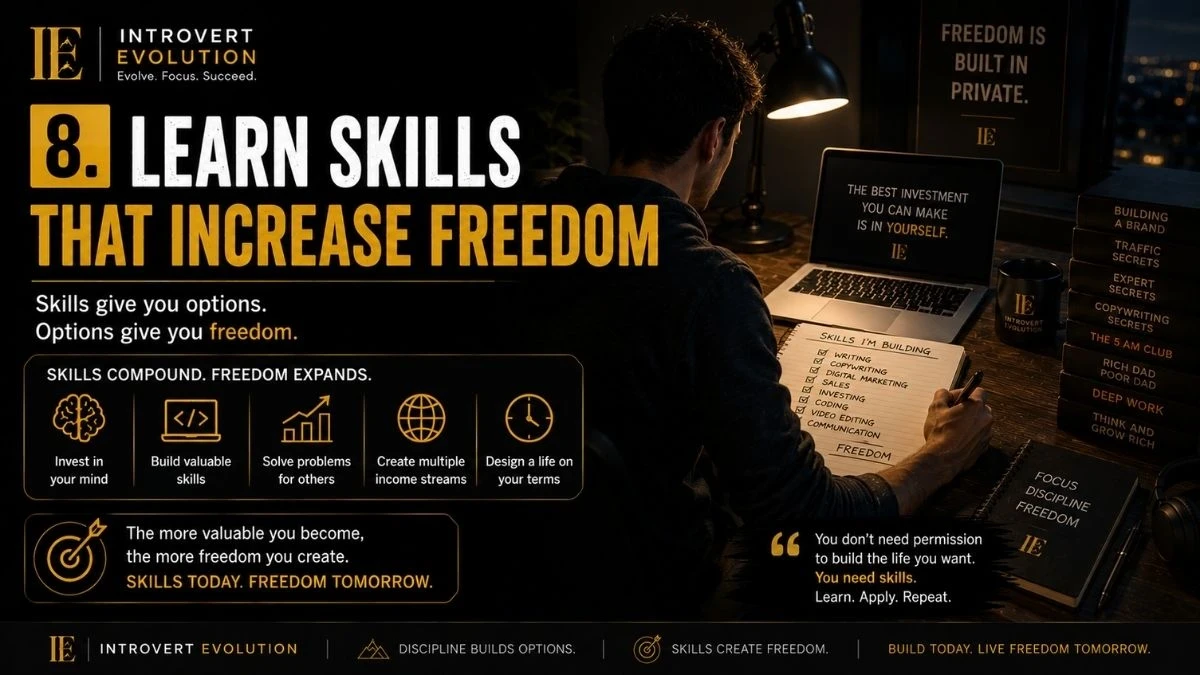
One of the most powerful ways to escape survival mode is to become more valuable.
The more useful skills you develop, the more options, opportunities, confidence, and freedom you create for yourself. Skills increase your ability to earn, adapt, grow, and build a better future.
Many people stay stuck because they stop learning after school.
Years pass, but their knowledge, mindset, and abilities barely change. Meanwhile, the world keeps evolving rapidly. Technology changes. Industries shift. Opportunities move online. The people who continue learning gain a massive advantage over those who stay passive.
Your Skills Shape Your Future
Your future income and opportunities are heavily connected to the skills you build today.
That does not mean you need to master everything at once.
But you should always be improving something.
Valuable skills today include:
- Writing
- SEO
- Content creation
- Sales
- Marketing
- Communication
- Video editing
- AI tools
- Trading
- Investing
- Coding
- Leadership
The internet has made learning more accessible than ever before, yet most people still spend more time consuming entertainment than developing themselves.
Skill Stacking Creates Opportunity
You do not need to become world-class at one thing.
Sometimes, combining several useful skills creates powerful opportunities.
For example:
- A writer who understands SEO
- A trader who creates content
- A coach who understands marketing
- A business owner who knows branding
This is often called skill stacking — building multiple complementary skills that together become highly valuable.
Over time, these skills can create:
- Extra income
- Career flexibility
- Business opportunities
- Remote work potential
- Greater independence
Focus on the Long Game
Most people quit learning too early because they do not see immediate results.
But skills compound over time.
The first few weeks often feel slow and frustrating. Progress seems invisible, and doubt appears quickly. That is where most people stop.
But one focused year of:
- Learning
- Practicing
- Improving
- Staying disciplined
- Creating consistently
Can completely change the direction of your life.
The problem is that most people underestimate what they can achieve over the long term while overestimating what they can achieve in a few weeks.
Invest in Yourself
The world is becoming increasingly competitive and distracted.
People who refuse to grow will struggle more over time, while those who continuously build skills develop greater adaptability, confidence, and freedom.
The good news is that self-education does not require perfection.
You can start small:
- Read daily
- Watch educational content
- Practice one skill consistently
- Take online courses
- Write regularly
- Learn how money works
- Improve communication
Every skill you build becomes part of your future.
And often, the skills you quietly develop today become the exact things that eventually help you escape survival mode for good.
Protect Your Environment
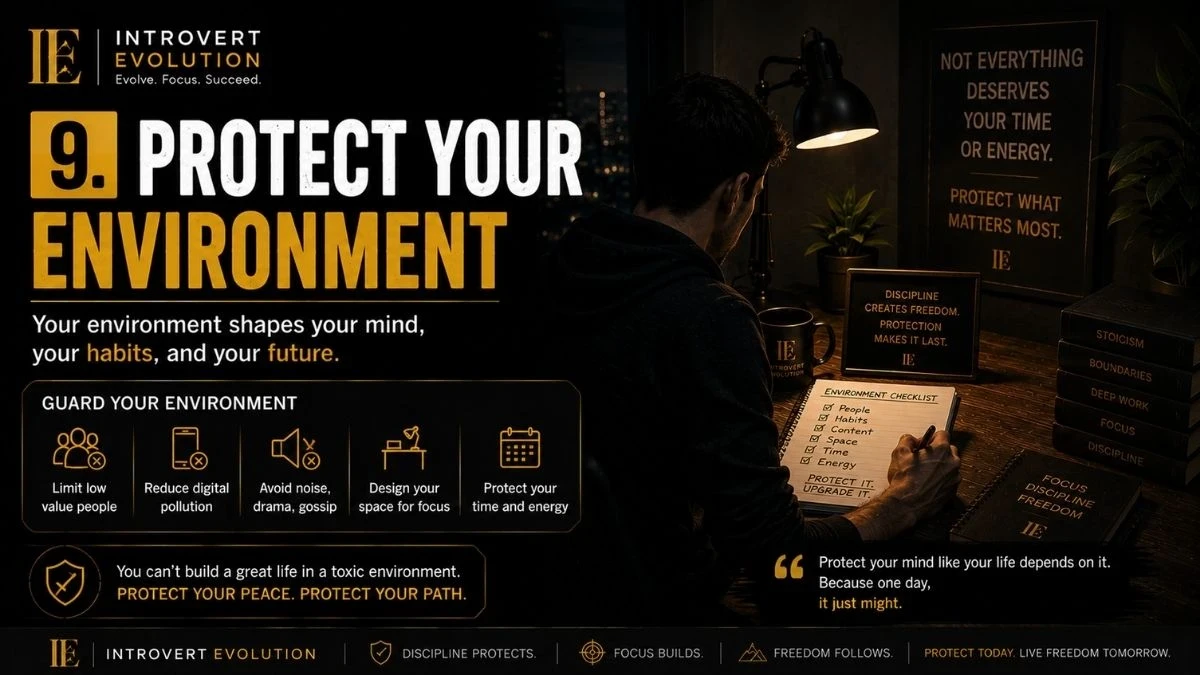
Your environment has more influence over your future than most people realise.
The people around you, the content you consume, your daily routines, your workplace, your habits, and even the condition of your room all shape your mindset over time.
You can have big goals and strong intentions, but if your environment constantly pulls you backwards, growth becomes much harder.
That is why protecting your environment is one of the most important parts of escaping survival mode.
Your Environment Either Builds You or Drains You
Many people are trying to improve their lives while surrounded by:
- Negativity
- Distractions
- Unhealthy habits
- Toxic people
- Constant stress
- Endless noise
- Nonstop consumption
Over time, these environments quietly drain mental energy and destroy focus.
You become influenced by whatever consistently surrounds you. If your environment encourages procrastination, distraction, and bad habits, eventually those things become normal.
On the other hand, an environment that supports discipline, learning, health, and growth makes improvement much easier.
Pay Attention to the People Around You
The people in your life affect your mindset more than you may realise.
Some people encourage growth. Others normalise excuses.
Some inspire discipline and ambition. Others drain your energy and keep you stuck in negativity.
That does not mean you need to cut everyone off. But you do need awareness. You need to spend more time around people who support the future you are trying to build.
Ask yourself:
- Who motivates me to improve?
- Who drains my energy?
- Who encourages growth?
- Who keeps me stuck?
Energy matters.
Your Digital Environment Matters Too
Most people ignore how much their digital environment affects them.
But your phone may influence your mindset more than your workplace.
Think about how much content you consume every day:
- Social media
- News
- Videos
- Podcasts
- Advertisements
- Negativity
- Endless opinions
Everything you repeatedly consume shapes your thinking.
If your digital environment is filled with comparison, outrage, fear, distractions, and negativity, your mind absorbs it over time.
That is why you need to become intentional about what you consume.
Follow people who educate and inspire you. Reduce meaningless noise. Protect your attention. Spend more time learning than scrolling.
Create an Environment That Supports Growth
You do not need a perfect life to create a better environment.
Small changes can make a huge difference:
- Keeping your space clean
- Reducing clutter
- Limiting notifications
- Improving sleep habits
- Organising your workspace
- Spending more time in nature
- Building healthier routines
The goal is to create an environment where the future version of you can actually grow.
It is extremely difficult to build a peaceful, disciplined, and focused life in an environment filled with stress, distractions, and chaos.
Protect your environment carefully.
Your future is being shaped by it every single day.
Your Future Is Built in Ordinary Days
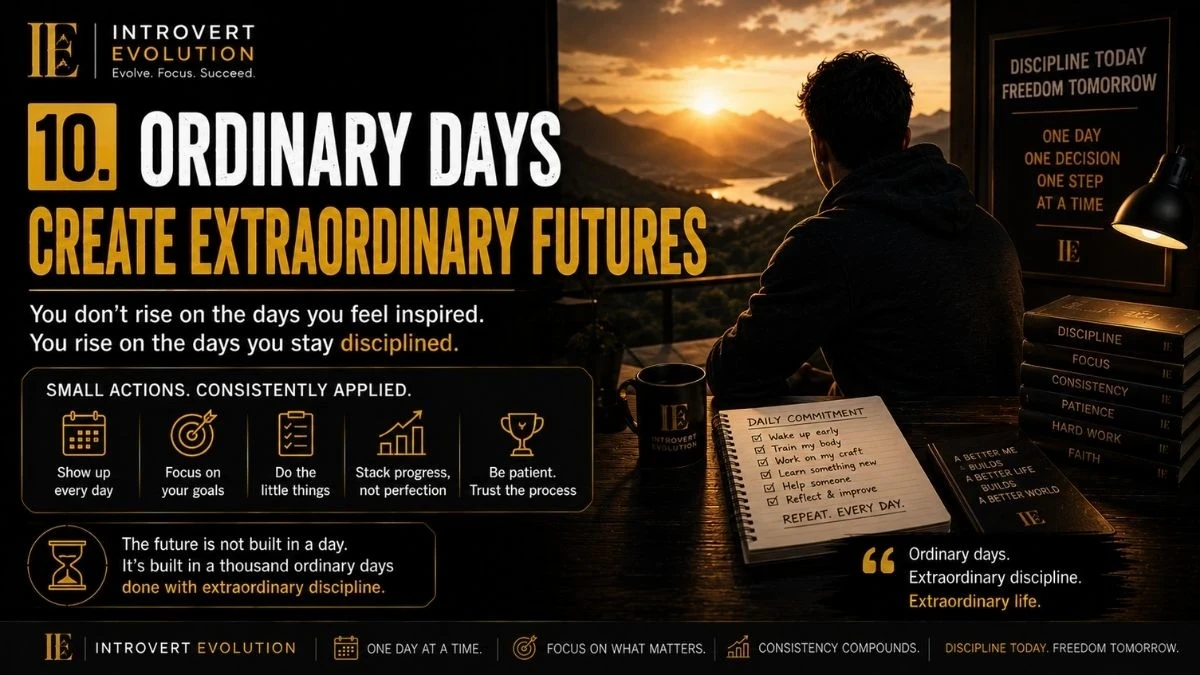
Most people think transformation looks dramatic.
They imagine one massive breakthrough where everything changes overnight — more motivation, more confidence, more money, more discipline, a completely different life, all at once.
But real transformation rarely happens like that.
Most life-changing progress looks ordinary while it is happening.
It looks like:
- Waking up early when you do not feel like it
- Going for a walk instead of scrolling
- Saving money consistently
- Reading daily
- Training even when motivation is low
- Learning a skill after work
- Repeating small habits consistently
These actions may seem insignificant in the moment, but over time, they completely reshape your future.
Success Is Usually Invisible at First
One reason so many people quit too early is that progress often feels invisible in the beginning.
You improve habits but still feel far from your goals. You work on yourself but see little immediate change. You build skills while feeling inexperienced. You create content, and nobody notices.
This is the phase where most people give up.
They mistake lack of immediate results for lack of progress.
But growth is often happening beneath the surface long before visible results appear.
Small Actions Compound Over Time
Every action you repeat becomes part of your identity.
One workout may not transform your body. One article may not grow your business. One healthy meal may not change your health.
But repeated consistently for months and years? Everything changes.
This is the power of compounding.
Small, disciplined actions repeated daily create:
- Stronger habits
- Better health
- Increased confidence
- Emotional stability
- Valuable skills
- Greater freedom
The problem is that most people want immediate rewards, while real transformation requires patience.
Consistency Changes Your Identity
Every time you keep a promise to yourself, you strengthen trust in yourself.
That matters more than most people realise.
Survival mode often destroys self-belief because people repeatedly break promises to themselves:
- “I’ll start Monday.”
- “I’ll change next month.”
- “I’ll do it later.”
But small, consistent actions slowly rebuild confidence and discipline.
You stop seeing yourself as stuck or incapable. You begin seeing yourself as someone who follows through. Someone who grows. Someone who intentionally builds a better future.
Ordinary Days Create Extraordinary Futures
Your future will not be built on a single perfect day.
It will be built through ordinary days repeated consistently.
The habits you repeat matter. The content you consume matters. The routines you follow matter. The small decisions nobody sees matter.
For more routine-based inspiration, read 15 Daily Rituals Of Highly Successful Introverts.
Most people underestimate how powerful one year of consistent effort can be.
A year of:
- Discipline
- Learning
- Healthier habits
- Focused work
- Protecting your attention
- Building skills
- Staying consistent
Can completely change the direction of your life.
That is how people escape survival mode.
Not through magic or motivation alone — but through ordinary days filled with intentional actions that slowly build an extraordinary future.
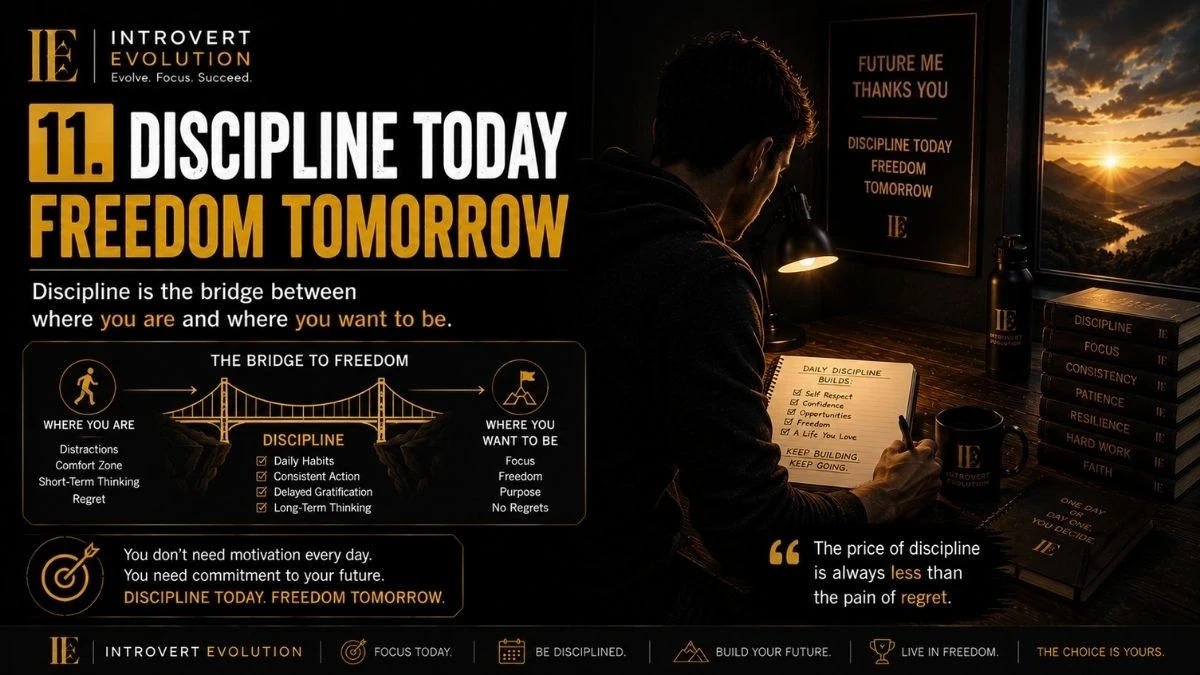
Final Thoughts
Survival mode can make life feel small.
It traps your focus on stress, exhaustion, distractions, and short-term survival until you eventually forget that a different life is possible. Many people spend years believing they are stuck forever simply because they have been overwhelmed for too long.
But being stuck is not your identity.
It is a season.
And seasons can change.
The truth is that your life can begin moving in a completely different direction through small decisions repeated consistently over time. You do not need a perfect plan or unlimited motivation to start improving your future.
You simply need to start.
Start protecting your energy. Start reducing distractions. Start improving your habits. Start building skills. Start thinking long-term again. Start becoming intentional about the life you want.
Progress may feel slow at first, but slow progress is still progress.
Most people stay trapped because they quit too early, distract themselves constantly, or wait for the perfect moment to change. Meanwhile, disciplined people quietly improve their lives day after day until one year later, everything looks different.
Your future is being built right now through your habits, routines, mindset, decisions, and environment.
The question is: Are your current actions building the future you truly want — or only helping you survive another day?
You have more control than you think.
One better habit can change your momentum. One skill can change your opportunities. One year of discipline can completely change your life.
The version of you that feels calm, focused, disciplined, healthy, and proud of their life is built slowly through consistent action, patience, and self-awareness.
Because the moment you stop living only to survive is the moment you finally begin building a future worth fighting for.
Recommended Books for Escaping Survival Mode
Sometimes, one good book can completely change the way you think about your habits, mindset, discipline, and future. These are some of the best books for building focus, resilience, emotional strength, and long-term growth.
Recommended reads:
- Atomic Habits by James Clear
- Deep Work by Cal Newport
- Can’t Hurt Me by David Goggins
- Digital Minimalism by Cal Newport
- The Mountain Is You by Brianna Wiest
- The Power of Now by Eckhart Tolle
Small ideas repeated consistently can completely change the direction of your life.
FAQ: Escaping Survival Mode
What does it mean to be in survival mode?
Survival mode is a mental and emotional state in which your brain focuses mainly on getting through the day rather than on long-term growth. It often happens during periods of stress, burnout, anxiety, exhaustion, or financial pressure.
People in survival mode usually feel constantly tired, distracted, overwhelmed, and emotionally drained.
What causes survival mode?
There are many possible causes, including:
- Financial stress
- Burnout
- Toxic environments
- Poor sleep
- Anxiety
- Overstimulation
- Unhealthy habits
- Constant digital distraction
- Lack of work-life balance
Modern life keeps many people in a constant state of stress and mental overload.
How do I know if I am stuck in survival mode?
Common signs include:
- Feeling constantly exhausted
- Struggling to focus
- Procrastinating on important goals
- Relying on distractions to cope
- Feeling emotionally numb
- Losing motivation
- Feeling stuck in routine
- Constantly feeling “behind”
If your main focus every day is simply “getting through it,” there is a strong chance you are operating in survival mode.
Can survival mode affect mental health?
Yes.
Staying in survival mode for long periods can increase stress, anxiety, burnout, emotional exhaustion, and low self-esteem. It can also affect sleep, focus, relationships, productivity, and physical health.
That is why recovery and creating stability are so important.
How long does it take to escape survival mode?
There is no exact timeline because everyone’s situation is different.
For some people, small changes create improvement within weeks. For others, rebuilding habits, confidence, finances, and mental health may take much longer.
The important thing is consistency.
Small daily improvements repeated over time create long-term transformation.
What is the first step to escaping survival mode?
The first step is awareness.
You must recognise that constant exhaustion, stress, distraction, and overwhelm should not become your permanent lifestyle.
After that, focus on creating stability through:
- Better sleep
- Healthier habits
- Reduced distractions
- Improved routines
- Exercise
- Budgeting
- Learning valuable skills
- Protecting your mental energy
Start small and stay consistent.
Can discipline help you escape survival mode?
Absolutely.
Discipline creates structure, momentum, and stability during difficult seasons of life. Small, disciplined actions repeated daily slowly rebuild confidence, focus, self-respect, and long-term progress.
Motivation comes and goes. Discipline helps you continue anyway.
Why do distractions keep people stuck?
Distractions provide temporary relief from stress, but they often prevent people from solving the deeper problems in their lives.
Constant scrolling, binge-watching, unhealthy habits, and endless entertainment create short-term dopamine hits while weakening focus, discipline, and long-term thinking.
Escaping survival mode often requires spending less time consuming and more time creating and improving.
Can introverts experience survival mode differently?
Yes.
Introverts often become mentally exhausted faster from overstimulation, noise, constant interaction, and lack of recovery time. Without enough time to recharge, burnout can build quietly over time.
Protecting energy and creating quiet recovery time becomes especially important.
Is it possible to completely change your life?
Yes — but usually not overnight.
Most meaningful transformations happen gradually through:
- Consistent habits
- Discipline
- Better routines
- Healthier environments
- Skill building
- Emotional resilience
- Long-term thinking
Small actions repeated consistently over time can completely change the direction of your life.
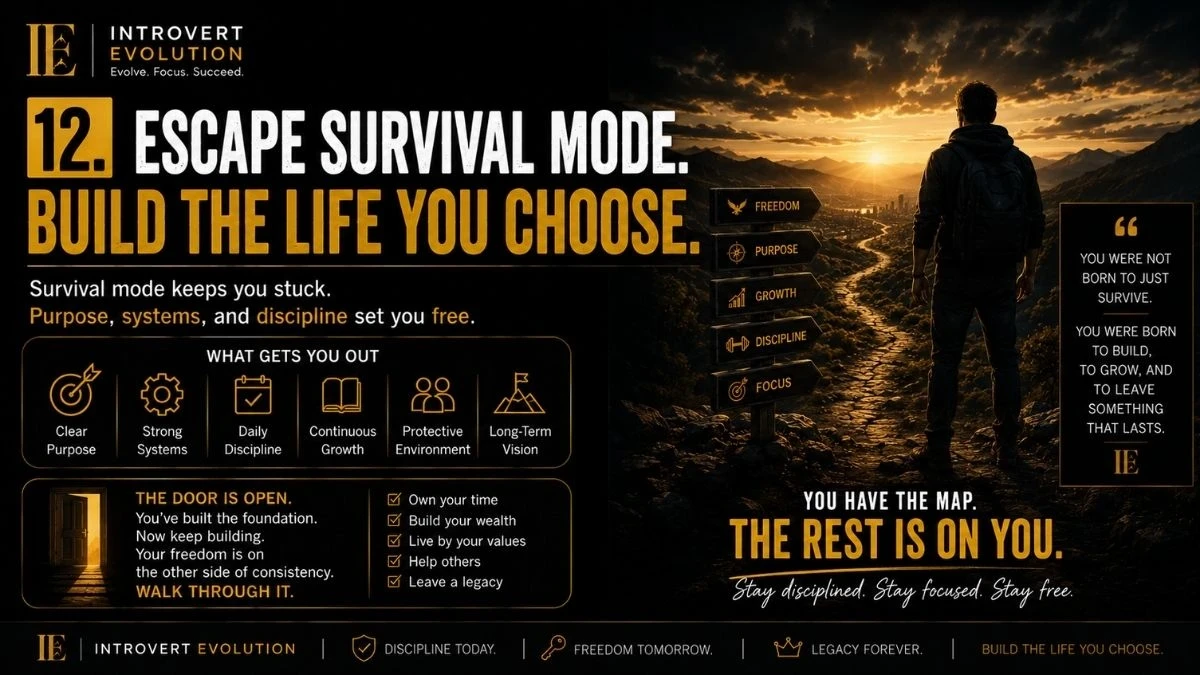
Want to escape survival mode and build a more focused, disciplined, and intentional life?
Join the Introvert Evolution newsletter for weekly insights on discipline, mindset, productivity, self-development, trading, and building a better future — without the noise and overwhelm.
Related Articles
If you enjoyed this article, you may also like these on Introvert Evolution:
- How To Stay Consistent When Life Gets Overwhelming
- How To Build Self-Discipline When You Have ADHD
- The Power Of A 2-Minute Plank A Day
- Mind And Body Wellness: 20 Essential Habits For A Healthier You
- Understanding And Managing Procrastination: A Guide For Introverts
- 15 Daily Rituals Of Highly Successful Introverts
- Motivation vs Discipline: Why Discipline Is The Real Key To Success
- The Dopamine Trap: Why Modern Distractions Are Destroying Your Focus
Thank you for your time. I hope you found this article helpful. If you have any questions, please comment below or contact me here.
Never underestimate how much your life can change when you stop surviving and start building with intention.
Have a great day!